A sanctuary, derived from the Latin sanctuarium, originally referred to a sacred space, often associated with religious practices or the presence of the divine, such as the area surrounding an altar in Christian churches or temples. Over time, the term broadened to include any place of refuge, whether for people, animals, or the environment.
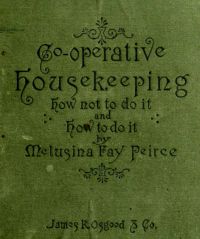
Authors like Joseph McCabe portrayed sanctuaries as stages for spiritual expression, while Lew Wallace described them as hubs of ritual in non-Christian traditions. Melusina Fay Peirce metaphorically viewed society itself as a possible sanctuary, and Frederick Douglass emphasized their function as communal shelters. These differing viewpoints highlight the sanctuary’s dual nature: a tangible site of holiness and a symbolic refuge for safety, transcending cultural and historical boundaries.
 Charles Heber Clark,
Out of the Hurly-Burly; Or, Life in an Odd Corner
Charles Heber Clark,
Out of the Hurly-Burly; Or, Life in an Odd Corner