Summary

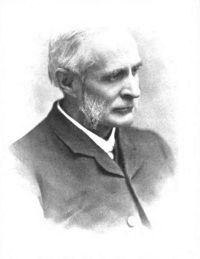
Portrait of W. Sanday W. Sanday The Criticism of the Fourth Gospel

If I may speak for a moment of the leading idea, not of St. John but of M. Loisy, I am afraid that the tendency, if not the purpose, of his whole book is to convict the author of the Gospel of writing fiction where he professes to write fact. ‘The theology of the Incarnation’ is a euphemism which is meant to describe the Gospel as from end to end allegory and symbol, the product of an idea and not of reality.
M. Loisy, we all know, occupies a peculiar position. His criticism is radical and destructive, but he believes himself to bring back as faith what his criticism has destroyed.
Source: Gutenberg

Portrait of W. Sanday W. Sanday The Criticism of the Fourth Gospel

As an ignotum the Gospel is really too great to plant down in the middle of the history of the second century without creating a disturbance of all the surrounding conditions which we may be sure would have lasted for years. Imagine this solid mass suddenly thrust into the course of events, as Schmiedel would say, somewhere about the year 140, between Basilides and Valentinus and their disciples, as it were under the very eyes of Polycarp and Anicetus and Justin and Tatian, without making so much as a ripple upon the surface.
Source: Gutenberg

Portrait of W. Sanday W. Sanday The Criticism of the Fourth Gospel

All depends upon the truth of the story of this Apostle’s death. It is one of those statements that we can neither wholly trust, nor wholly distrust. There is a real chance that it may be right, and there is an equally real chance that it may be wrong; the evidence, as it seems to me, does not warrant a positive assertion either way. I should be much inclined to think that, if the statement is true, there was but one John at Ephesus, the beloved disciple who was also the Presbyter; and, if the statement is false, there was still but one John, who was both Presbyter and Apostle.
Source: Gutenberg

Get perspective with Kwize: daily news enlightened by great literature