Logos

Definition and stakes

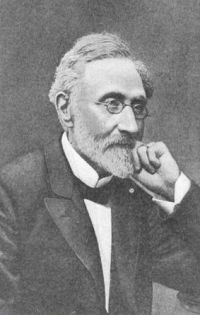
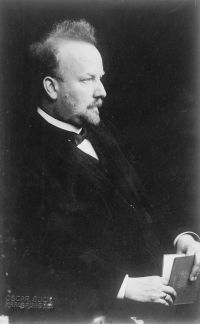
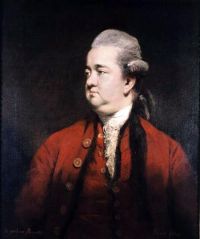
Portrait of F. Max Müller F. Max Müller,  The Silesian Horseherd - Questions of the Hour

“ But the Logos hypothesis has the far-reaching advantage, that instead of a long succession of wonders,—call them if you like the wonder of the monads, or the worm, or the mollusk, or the fish, or the amphibian, or the reptile, or the bird, or, lastly, man,—it has but one wonder before it, the Logos, the idea of thought, or of the eternal thinker, who thought everything that exists in natural sequence, and in this sense made all. In this view we need not even abandon the survival of the fittest, only it proceeds in the Logos, in the mind, not in the outward phenomenal world. ”
Source: Gutenberg

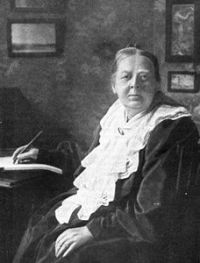
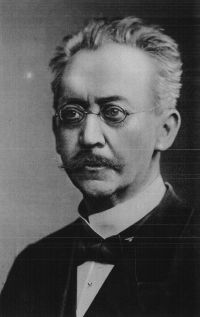
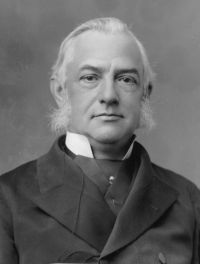
Portrait of Jeremiah Curtin Jeremiah Curtin,  Myths and Folk-Lore of Ireland (1911)

“ Logos grew to mean the inward constitution as well as the outward form of thought, and consequently became the expression of exact thought,—which is exact because it corresponds to universal and unchanging principles,—and reached its highest exaltation in becoming not only the reason in man, but the reason in the universe,—the Divine Logos, the thought of God, the Son of God, God himself. ”
Source: Wikisource

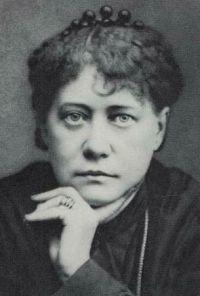
Portrait of H. P. Blavatsky H. P. Blavatsky,  The Secret Doctrine, Vol. 2 of 4

“ Moreover, Man was regarded in several systems as the Third Logos. The Esoteric meaning of the word Logos—Speech or Word, Verbum—is the rendering in objective expression, as in a photograph, of the concealed thought. The Logos is the mirror reflecting Divine Mind, and the Universe is the mirror of the Logos, though the latter is the esse of that Universe. As the Logos reflects all in the Universe of Plerôma, so Man reflects in himself all that he sees and finds in his Universe, the Earth. ”
Source: Gutenberg

Get perspective with Kwize: daily news enlightened by great literature