“ There would justice shine forth and courage and prudence and wisdom: and humanity, that rare virtue, would pour its light over all. Every one would declare him worthy of honour and of love. If any one saw that face, more lofty and splendid than any usually found among men, would he not stand in dumb wonder as before a God, and silently pray that it might be for his good to have seen it? Then, overcome by the inviting grace of the vision, he would kneel in prayer, and after long meditation, filled with wondering awe, he would break forth into Virgil’s words: ‘Hail to thee, whoe’er thou art! ”
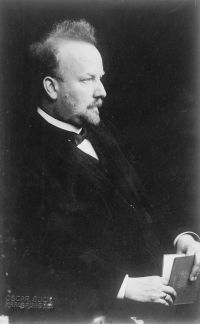
Arthur Drews
Summary
Published in 1909, The Christ Myth by Arthur Drews is a provocative work of historical and theological critique that challenges the historicity of Jesus, presenting the figure of Christ as a product of religious syncretism rather than a historical individual. Drews, a German scholar aligned with early 20th-century critical thought, systematically dismantles traditional narratives of Jesus’s existence, arguing that the New Testament’s accounts are steeped in legend, influenced by Greco-Roman, Persian, and Jewish religious motifs.
Drawing on predecessors like David Strauss and Bruno Bauer, he critiques liberal theology’s sentimentality and the circular logic of historical Jesus studies, asserting that Christianity emerged from collective religious imagination rather than a singular historical figure. The book’s integration of anthropology, mythology, and textual analysis underscores its role as a pivotal text in the ongoing debate over religion’s origins.
Quotes from The Christ Myth (Arthur Drews)
“ I am a man, nothing human do I despise! Human life consists in well-doing and striving. It will be cemented into a society of general aid not by fear but by mutual love. What is the rightly constituted, good and high-minded soul, but a God living as a guest in a human body? Such a soul may appear just as well in a knight as in a freedman or in a slave. We can soar upwards to heaven from any corner. Make this your rule, to treat the lower classes even as you would wish the higher to treat you. Even if we are slaves, we may yet be free in spirit. The slaves are men, inferior relatives, friends ”
“ To think of the world’s activity as God’s activity; of mankind’s development, filled with struggles and sufferings, as the story of a divine struggle and Passion; of the world-process as the process of a God, who in each individual creature fights, suffers, conquers and dies, so that he may overcome the limitations of the finite in the religious consciousness of man and anticipate his future triumph over all the suffering of the world—that is the real Christian doctrine of redemption. ”
