Rigveda

Definition and stakes

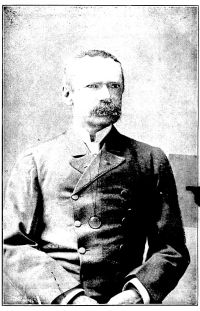
Portrait of Arthur Anthony Macdonell Arthur Anthony Macdonell,  A History of Sanskrit Literature

“ By far the greater part of the poetry of the Rigveda consists of religious lyrics, only the tenth book containing some secular poems. Its hymns are mainly addressed to the [65] various gods of the Vedic pantheon, praising their mighty deeds, their greatness, and their beneficence, or beseeching them for wealth in cattle, numerous offspring, prosperity, long life, and victory. The Rigveda is not a collection of primitive popular poetry, as it was apt to be described at an earlier period of Sanskrit studies. ”
Source: Gutenberg

Portrait of Arthur Anthony Macdonell Arthur Anthony Macdonell,  A History of Sanskrit Literature (1900)

“ Their number in two passages of the Rigveda is stated as seven or eight, while in the Brāhmaṇas and later it is regularly twelve. Some eight or ten hymns of the Rigveda are addressed to them collectively. The following lines are taken from one (viii. 47) in which their aid and protection is specially invoked:—
As birds extend their sheltering wings, Spread your protection over us. As charioteers avoid ill roads, May dangers always pass us by. Resting in you, O gods, we are Like men that fight in coats of mail.
”
Source: Wikisource

Portrait of Arthur Anthony Macdonell Arthur Anthony Macdonell,  A History of Sanskrit Literature

“ It is to be noted that the Dṛishadvatī, the “stony” (now Ghogra or Ghugger) , in the only passage in which the name occurs in the Rigveda, is associated with the Sarasvatī, Agni being invoked to flame on the banks of these rivers. This is perhaps an indication that even in the age of the Rigveda the most easterly limit of the Indus river system had already acquired a certain sanctity as the region in which the sacrificial ritual and the art of sacred poetry were practised in the greatest perfection. ”
Source: Gutenberg

Get perspective with Kwize: daily news enlightened by great literature