Yajurveda

Definition and stakes

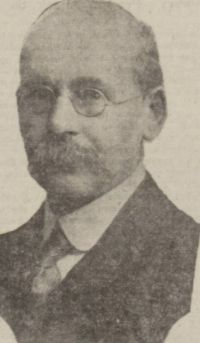
Portrait of Arthur Anthony Macdonell Arthur Anthony Macdonell,  A History of Sanskrit Literature

“ The Yajurveda introduces us not only to a geographical area different from that of the Rigveda, but also to a new epoch of religious and social life in India. The centre of Vedic civilisation is now found to lie farther to the east. We hear no more of the Indus and its tributaries; for the geographical data of all the recensions of the Yajurveda point to the territory in the middle of Northern India occupied by the neighbouring peoples of the Kurus and Panchālas. ”
Source: Gutenberg

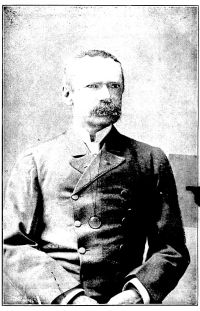
Portrait of Arthur Anthony Macdonell Arthur Anthony Macdonell,  A History of Sanskrit Literature (1900)

“ The Yajurveda resembles the Sāmaveda in having been compiled for application to sacrificial rites only. But while the Sāmaveda deals solely with one part of the ritual, the soma sacrifice, the Yajurveda supplies the formulas for the whole sacrificial ceremonial. Like the Sāmaveda, it is also connected with the Rigveda; but while the former is practically altogether extracted from the Rigveda, the Yajurveda, though borrowing many of its verses from the same source, is largely an original production. Thus somewhat more than one-fourth only of the Vājasaneyi Saṃhitā is derived from the Rigveda. ”
Source: Wikisource

Portrait of Arthur Anthony Macdonell Arthur Anthony Macdonell,  A History of Sanskrit Literature

“ The beginnings of Indian philosophy, which are to be found in the latest hymns of the Rigveda and in the Atharvaveda, are concerned with speculations on the origin of the world and on the eternal principle by which it is created and maintained. The Yajurveda further contains fantastic cosmogonic legends describing how the Creator produces all things by means of the omnipotent sacrifice. With these Vedic ideas are intimately connected, and indeed largely identical, those of the earlier Upanishads. ”
Source: Gutenberg

Get perspective with Kwize: daily news enlightened by great literature