Samhita

Definition and stakes

| editor,  Sacred Books of the East/Volume 1 (1879)

“ Now Hrasva Mandukeya says: 'We reciters of Nirbhuga say, "Yes, the former half is the first syllable, and the latter half the second syllable, but the Samhita is the space between the first and second halves in so far as by it one turns out the union (sandhi) , and knows what is the accent and what is not, and distinguishes what is the mora and what is not."'
5. He who thus knows this Samhita (union) , becomes united with offspring, cattle, fame, glory of countenance, and the world of Svarga. He lives his full age.
”
Source: Wikisource

Atharva-Veda Samhita (1905)

“ It is apparent, in the first place, that this division is made up of those seven books in which the number—normal or prevalent—of verses to a hymn runs from one to eight; secondly, that the saṁhitā itself begins with the norm of four; and, thirdly, that the number two as a norm is missing from the series. Fourthly, it is indeed apparent that every book shows departures from its norm ”
Source: Wikisource

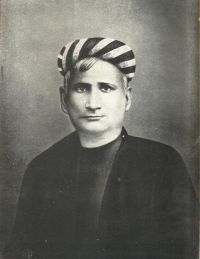
Portrait of Bankim Chandra Chattopadhyay Bankim Chandra Chattopadhyay,  Vedic Literature (1894)

“ Each Veda consists of a Mantra portion, a number of treatises known as the Brahmanas, and another set of treatises or discourses known as the Upanishads. There are also a few treatises of a voluminous character known as the Aranyakas.
The Mantra portion of each of the Veda is known as its Samhita. The Rig-Veda Samhita is by far the most interesting of all. European scholars regard it as the most ancient of all, an opinion from which most native scholars will probably dissent.
”
Source: Wikisource

Get perspective with Kwize: daily news enlightened by great literature