Sindhu

Definition and stakes

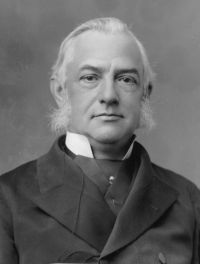
Portrait of Henry Yule Henry Yule,  Hobson-Jobson — I (1903)

“ The aspirated and Persianised form Hind, as applied to the great country beyond the Indus, passed to the Arabs. But when they invaded the valley of the Indus and found it called Sindhu, they adopted that name in the form Sind, and thenceforward 'Hind and Sind' were habitually distinguished, though generally coupled, and conceived as two parts of a great whole.
Of the application of India to an Ethiopian region, an application of which indications extend over 1500 years, we have not space to speak here.
”

Source: Wikisource

James McCrone Douie,  Provincial Geographies of India (1916)

“ That is the typical state of the Himalayan rivers, though the same Jhelam above Baramula is an exception, flowing there sluggishly through a very flat valley into a shallow lake.
The Indus Basin.— The river Sindh (Sanskrit, Sindhu) , more familiar to us under its classical name of the Indus, must have filled with astonishment every invader from the west, and it is not wonderful that they called after it the country that lay beyond.
”
Source: Wikisource

Sacred Books of the East (1900)

“ These noble sons of Sindhu are like grinding-stones, they are always like Soma-stones, tearing everything to pieces; these sons of a good mother are like playful children, they are by their glare like a great troop on its march. Illumining the sacrifice like the rays of the dawn, they shone forth in their ornaments like triumphant warriors; the Maruts with bright spears seem [pg 23] like running rivers, from afar they measure many miles. O gods, make us happy and rich, prospering us, your praisers, O Maruts! ”
Source: Gutenberg

Get perspective with Kwize: daily news enlightened by great literature