“ What's so honorable about Rajputs slaughtering each other?""Warriors are bound by their dharma to join in battle against other warriors. A warrior who fails in his duty sins against the dharma of his caste." Vasant Rao paused. "But why am I bothering to tell you this? I sound like Krishna, lecturing Arjuna on his duty as a warrior.""Who's Krishna? Another Rajput?""He's a god, Captain Hawksworth, sacred to all Rajputs. He teaches us that a warrior must always honor his dharma." ”
Rajputs
Definition and stakes
The Rajputs, a dominant caste in historical India, are renowned for their martial skill, feudal devotion, and commitment to dharma, or cosmic duty. Authors such as Thomas Hoover and Talbot Mundy examine their cultural spirit, portraying their struggles as both tragic and unavoidable, while Bankim Chandra Chattopadhyay emphasizes their honor through moral contrasts.
Richard Garbe and the Encyclopædia Britannica point out their physical and social uniqueness, highlighting their pride and tenacity. Meanwhile, L. Adams Beck and Sir James McCrone Douie illustrate their roles as fighters and farmers, influenced by caste traditions. These diverse viewpoints together reveal the Rajputs as a people whose heritage persists through both strife and cultural resilience.
Quotes about “Rajputs”
Talbot Mundy, Rung Ho! A Novel
“ At least at the beginning it was evident that all the interest of all the Rajputs lay in letting the British get the worst of it; even should the British suddenly wake up and look about them and take steps—or should the British hold their own with native aid, and so save India from anarchy, and afterward reward the men who helped—the Rajputs would stand to gain less individually, or even collectively, than if they let the English be driven to the sea, and then reverted to the age-old state of feudal lawlessness that once had made them rich. ”
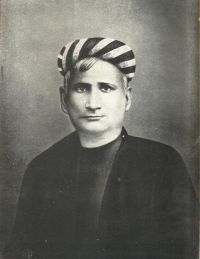
Bankim Chandra Chattopadhyay,
Durgesa Nandini
(1880)
“ Being a Yavan, you durst kick the person of a Rajput Prince, and it is only for this guilt of yours that I have reduced you to this plight; otherwise the Rajputs are never so ungrateful as to lay their hands on the persons of their benefactors. ”
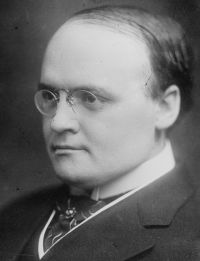
Richard Garbe, Akbar, Emperor of India: A Picture of Life and Customs from the Sixteenth Century
“ Even to-day every traveler in India thinks he has been set down in another world when he treads the ground of Rajputâna and sees around him in place of the weak effeminate servile inhabitants of other parts of the country powerful upright men, splendid warlike figures with blazing defiant eyes and long waving beards.While Akbar valued the Rajputs very highly his own personality was entirely fitted to please these proud manly warriors. ”
1911 Encyclopædia Britannica (1911)
“ Linguistic evidence supports tradition in proving that their unity was broken up by the Mahommedan conquest, for the inhabitants of the Himalayan valleys still speak a language akin to those of Rajputana proper, though separated from them by the wide Gangetic valley. The Rajputs are fine, brave men, and retain the feudal instinct strongly developed. Pride of blood is their chief characteristic, and they are most punctilious on all points of etiquette. ”
1911 Encyclopædia Britannica (1911)
“ It is commonly supposed that, because nearly the whole country is ruled by Rajputs, therefore the population consists mainly of Rajput tribes; but these are merely the dominant race, and the territory is called Rajputana because it is politically possessed by Rajputs. The whole number of this race is 620,229, and nowhere do they form a majority of the whole population in a state; but they are Strongest, numerically, in the northern states and in Udaipur. ”
L. Adams Beck,
The ninth vibration and other stories
“ For the Rajputs take counsel with their women who are wise. They were silent, each weighing the force of resistance that could be made; and this the Rani knew even as he. “It cannot be,” she said; “the very ashes of the dead would shudder to hear. Shall the Queens of India be made the sport of the barbarians?” Her husband looked upon her fair face. She could feel his heart labor beneath her ear. “True, wife; but the barbarians are strong. Our men are tigers, each one, but the red dogs of the Dekkan can pull down the tiger, for they are many, and he alone.” ”
Romesh Chunder Dutt,
The Slave Girl of Agra
(1909)
“ And if the women of Amber can sometimes use their tongues, the men of Amber can oftener use their lances." "Why, that is well said, Rajput lady, and Akbar will never deny what Rajputs have done for the Empire. But let us know the real price of this bracelet, good dame. The fair witches of Rajasthan are ever stealing our hearts; spare our purses, fair one." "The palace is well guarded, sire," replied the witty Rajputanee with the same assumed modesty, "and there is little risk of thefts either by witches or by wizards. ”
Sir James McCrone Douie, The Panjab, North-West Frontier Province…
“ Rájputs.—Rájputs are found in considerable numbers all over the province except in a few of the western and south-western districts. As farmers they are much hampered by caste rules which forbid the employment of their women in the fields, and the prohibition of widow remarriage is a severe handicap. They are generally classed as poor cultivators, and this is usually, but by no means universally, a true description. The Dogra Rájputs of the low hills are good soldiers. They are numerous in Kángra and in the Jammu province of Kashmír. ”
“ Rajputs were said to kill tigers with only a katar and a leather shield, but he wasn't sure he believed the stories. He grasped it and made a few trial thrusts, its ten- inch blade shining in the lamplight like a mirror, then tossed it atop his sea chest. It would make a nice memento of the trip; every fighting man in India seemed to carry one. Who in London would ever believe such a weapon unless they saw it?Out of the corner of his eye he caught a flutter in the portiere of his tent, and he looked up to see Shirin standing silently in the doorway. ”
“ The western Rajputs, generally of purer blood, are not so fastidious about caste, while farther east, especially Benares way, the Rajput is inclined to become Brahmanised. Brahmanism, whatever its merits, is not a good forcing ground for the military spirit. Exclusiveness is the bane of "the twice-born," especially in war. On service the essentials of caste are observed among Rajputs and Brahmans as fastidiously as in peacetime, only a certain amount of ceremonial is dispensed with. At ordinary times the high-caste Hindu when he is away from home prepares his own dinner and eats it alone. ”
Flora Annie Webster Steel,
India Through the Ages: A Popular and Picturesque History of Hindustan
“ The fierce on-sweep of the Moslem scimitar had mowed down the tangle of petty chiefships which had grown up in the Dark Ages, and so left room for the spreading of four great kingdoms, Delhi, Ajmîr, Kanauj, Guzerât, which were all held by the representatives of certain Râjput clans.Now the Râjputs are born soldiers. They represent the second, or military (called the Kshatriya) caste of ancient Vedic time; they have provided India for long centuries with her warriors, her nobles, her monarchs. ”
Sir J. W. Fortescue,
Military History: Lectures Delivered at Trinity College…
“ I pass over the innumerable tides of invasion which swept over Hindostan from the north-west, until we come to the first formidable inroad of Mohammedan Arabs in 999 A.D. The great champions of Hinduism against Islam were the Rajputs, whose nobles still represent the highest aristocracy and the bluest blood in India. For a long time they combated desperately and with success; but in 1193 the Mohammedans captured Delhi, and within another twenty years they definitely overthrew the Rajputs and established themselves as potential masters of India. ”
| editor, The Modern Review (1921)
“ For, while in Hindu India the Rajputs were busy fighting each other in the vanity of a suicidal competition of bravery, the Mussalmans swept in through the breaches created by their dissensions, and scattering themselves all over the country they also made it then own by living and dying on its soil. ”
“ The vicinity of the Ranghars to the Mogul capital helps to explain their submission; it does not explain the relative virility and vitality of the breed to-day compared with their Hindu Rajput contemporaries. It will be generally admitted, I think, that the average Ranghar or Khaim Khani is a stouter man than the Rajput pure and simple. Why this should be so; why the descendants of the unconverted Rajputs who held by their faith should not produce as hard a breed of men as the Rajputs who were the first to submit to Islam, and that under compulsion, is a mystery unexplained. ”
“ Rajputs love to battle, but not amid their own cities and fields. And that's easy to understand. Rana Karan Singh is in a difficult position. He knows if I stand here and fight, the battle could well destroy Udaipur.""What will you do?""I'll probably have to move out soon, and move quickly, farther north into the mountains or back south to Burhanpur. I can't stand and fight again, not yet. That's one of the reasons I sent for you." He turned to face Hawksworth. "I think it's time you left India. No one in Agra except Nadir Sharif knows you're alive. ”
Otto Rothfield, Women of India
“ The hill Rajputs of the Himalayas, among whom for generations survived the last indigenous school of Indian painting, can also fairly put forward a claim based on historical descent. But in addition, throughout Northern India, whenever by the fortune of circumstance a new tribe, not yet included as a caste in the orthodox Hindu system, has attained to princely power, the claim to true Rajput ancestry, for a time overlaid and obscured by the dust-layers of adversity, is propounded and defended. Minstrels in India are no less complacent than genealogists and heralds in Europe ”
Robert Kerr, A General History and Collection of Voyages and Travels…
“ The Rajputs eat no beef or buffalo flesh, even worshipping them; and the Moguls say that the Rajputs know how to die as well as any in the world. The Banians kill nothing, and are said to be divided into more than thirty different casts, that differ somewhat among them in matters of religion, and may not eat with each other. All burn their dead; and when the husband dies, the widow shaves her head, and wears her jewels no more, continuing this state of mourning as long as she lives. ”
Various, Encyclopaedia Britannica, 11th Edition…
“ Roughly there are four great sections of the population: the Mahratta section, who belong to the ruling circles; the Rajputs, who are also hereditary noblemen; the trading classes, consisting chiefly of Marwaris and Gujaratis; and lastly, the jungle tribes of Dravidian stock. The Mahrattas are foreigners, and, though rulers of the greater part of Central India, have no true connexion with the soil and are little met with outside cities, the vicinity of courts, and administrative centres. The Rajputs with all their endless ramifications form a large portion of the population. ”
Talbot Mundy, Rung Ho! A Novel
“ Her will was as strong as his, and yielded place to nothing but her sense of loyalty. There were not only Rajputs, as the Rajputs knew, who could be true to a high ideal. “I am sure that whoever that man is he must be the link between us and the safety Mahommed Gunga spoke of. Otherwise, why does he stay behind? Native officers who have servants take their servants with them, as a rule.” ”
Various, The Library Magazine of Select Foreign Literature
“ During this period also the Rajputs, who have been well called the Normans of the East, seem to have found their way to nearly every throne in India. Their acquisition of power has never been fully traced, and probably the materials are wanting for any full or accurate account of it ”
Edwin H. H. Collen, The Empire and the century — The Indian Army (1905)
“ Hindustanis, Brahmans, and Rajputs still produce good soldiers, but have fallen from their high estate since the days when we conquered India with their aid. The Rajput is not the soldier he once was, but is still capable of doing good service when well led. The Mahratta, once the fighting man of the Deccan, who did such fine service under Wellington, seems to have lost much of his military virtue; while the Madras soldier, whether Tamil (Hindu) or Mohammedan, is no longer the soldier of our early history in India. ”
Richard Garbe, Akbar, Emperor of India: A Picture of Life and Customs from the Sixteenth Century
“ He had seen enough faithlessness in the Mohammedan nobles and in his own relatives. Besides, Akbar was born in the house of a small Rajput prince who had shown hospitality to Akbar's parents on their flight and had given them his protection.The Rajputs are the descendants of the ancient Indian warrior race and are a brave, chivalrous, trustworthy people who possess a love of freedom and pride of race quite different in character from the rest of the Hindus. ”
1911 Encyclopædia Britannica (1911)
“ The Rajputs, with a total of over a million and three-quarters, comprise tribes of different religions, races and social systems. By religion they are mostly Mahommedan, only about one-fourth being Hindus, while a very few are Sikhs. By race they include the ancient ruling tribes of the Jumna valley, the Tomar and Chauhan, which gave Delhi its most famous Hindu dynasties ”
James Talboys Wheeler, India Under British Rule from the Foundation of the East India Company
“ High caste was the main characteristic of the Hindu sepoys in the Bengal army. Of the 800 Hindus in every regiment, about 400 were Brahmans, the sacred caste of India, who claim to be gods, and are supposed to be endowed with supernatural powers. Next to the Brahmans were about 200 Rajputs, the royal caste of India, who claim to be "sons of Rajas," and are soldiers by birth as well as calling. The remaining 200 Hindus were men of low caste, who were regarded as inferior beings. The Brahmans were powerful over all, and were worshipped by the Rajputs as well as by the low castes. ”
H. G. Keene, The Fall of the Moghul Empire of Hindustan
“ Nor was it an easy matter, at this particular juncture, to set about military reforms, for the Rajputs, emboldened perhaps by the resistance of Raghogarh, now began to organize a combination, which not only implied a considerable loss of power and of revenue, but likewise threatened to cut off the Patel's communications with Punah. Raja Partab Singh (head of the Kachwahas, and Dhiraj of Jaipur) , called for the aid of the head of the Rathor clan, Maharaja Bijai Singh of Jodhpur, who had married his daughter, and who adopted his cause with alacrity. ”
Francis Hamilton, An Account of The Kingdom of Nepal
“ Before the arrival of the Rajputs, it is said, that this nation consisted of twelve Thums, or clans, the whole members of each being supposed to have a common extraction in the male line; and a man and woman of the same blood could not intermarry. ”
“ But the proud Rajput warriors were unwilling to be classed with these. "We come of a fighting stock," they argued, "like the Pathans. Our history is more glorious than theirs." So they adopted the suffix "Khan," which with the man of genuine Muhammadan ancestry implies Pathan descent. The Chohans, when they became converted, were known to the Rajputs as the Kaim Khanis, or "the firm and unbreakable ones." Every Ranghar, too, was be-khaned, and as a class they have shown a martial spirit equal to the title.The British officer in the Indian Cavalry swears by the Ranghars. ”
Louis Joseph Vance,
The Bronze Bell
“ You hear a great deal about the astuteness of the Russians and the yellow races, and a Greek or Turk can lie with a fairly straight face when he sees a profit in deception, but none of them is to be classed with these people. If we English ever decide to let India rule herself, her diplomatic corps will be recruited exclusively from the flower of Rajputana's chivalry.""I'll back Salig Singh against the field," said Raikes grimly; "he'll be dean of the corps, when that time comes. He'd rather conspire than fight, and the Rajputs—of course you know—are a warrior caste. ”
R. V. Russell, The Tribes and Castes of the Central Provinces of India…
“ Several Rājput clans, as the Panwārs of the Wainganga Valley, the Rāghuvansis, the Jādums derived from the Yādava clan, and the Daharias of Chhattīsgarh, have formed distinct castes, marrying among themselves. A proper Rājpūt should not marry in his own clan. These groups have probably in the past taken wives from the surrounding population, and they can no longer be held to belong to the Rājpūt caste proper, but rank as ordinary agricultural castes. Other agricultural castes have probably been formed through mixed descent from Rājpūts and the indigenous races. ”
William Charles Benett, Gazetteer of the Province of Oudh Vol-2 -- H. to M. (1877)
“ Thus the Rajputs, who form 40 per cent of the popu. lation in parts of Rájputána, become fewer and fewer towards the east till in Dacca and Calcutta they are less numerous than the Europeans. Others of the játs are of one common blood and stock, which has become severed 27 206 KHE and divided by the exercise of separate trades, each of which, according to the Hindu system, must be followed exclusively by the children of those who from generation to generation have practised it. ”