Mithras

Definition and stakes

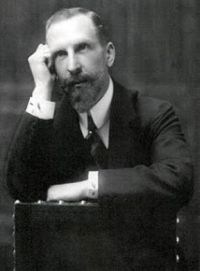
Portrait of Rudyard Kipling Rudyard Kipling,  A Song to Mithras

“ A SONG TO MITHRAS
Mithras, God of the Morning, our trumpets waken the Wall!
'Rome is above the Nations, but Thou art over all!'
Now as the names are answered, and the guards are marched away,
Mithras, also a soldier, give us strength for the day!
Mithras, God of the Noontide, the heather swims in the heat.
Our helmets scorch our foreheads; our sandals burn our feet.
”

Source: Wikisource

Francis Legge,  Forerunners and rivals of Christianity… (1915)

“ If the worship of Mithras were not indigenous in Western Asia, it may therefore well have come there independently of the Persians [796] .
There is no doubt, however, that the roots of Mithras-worship went very far down into the Persian religion. In the Yashts or hymns which are the earliest evidence of primitive Iranian beliefs, Mithra—to use the Avestic spelling of his name—frequently appears, not indeed as the material sun, but as the “genius of the heavenly light” which lightens the whole universe [797] and is the most beneficent among the powers of Nature.
”
Source: Gutenberg

Portrait of Manly Palmer Hall Manly Palmer Hall,  The Secret Teachings of All Ages… (1928)

“ Mithras has a male and a female aspect, though not himself androgynous. As Mithras, he is the ford of the sun, powerful and radiant, and most magnificent of the Yazatas (Izads, or Genii, of the sun) . As Mithra, this deity represents the feminine principle; the mundane universe is recognized as her symbol. She represents Nature as receptive and terrestrial, and as fruitful only when bathed in the glory of the solar orb. The Mithraic cult is a simplification of the more elaborate teachings of Zarathustra (Zoroaster) , the Persian fire magician. ”
Source: Wikisource

Get perspective with Kwize: daily news enlightened by great literature