
Zend Avesta

Definition and stakes

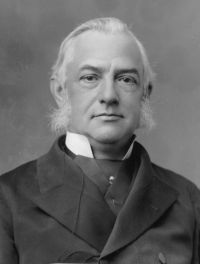
Portrait of Henry Yule Henry Yule,  Hobson-Jobson — Z (1903)

“ Zendavesta is the name which has been by Europeans popularly applied to the books just spoken of as the Avesta. The term is undoubtedly an inversion, as, according to Haug, "the Pahlavi books always style them Avistâk va Zand (Avesta and Zend) " i.e. the Law with its traditional and authoritative explanation. ”
Source: Wikisource

Elizabeth A. Reed,  Persian Literature, Ancient and Modern

“ But aside from some of the inscriptions, the earliest literature we now have belonging to this people is the Zend-Avesta, our present version of which was possibly derived from texts which already existed in the time of the Achæmenian kings. Although there are no facts to prove that the text of the Avesta as we now possess it was committed to writing previous to the Sassanian dynasty [16] Prof. Darmesteter thinks it possible that “Herodotus may have heard the Magi sing, in the fifth century before Christ, the very same Gāthas which are sung now a days by the Mobeds of Bombay.” ”
Source: Gutenberg

Portrait of F. Max Müller F. Max Müller,  Chips from a German Workshop, Volume 1

“ Hints have been thrown out from time to time by various writers that certain ideas in the Old Testament might be ascribed to Persian influences, and be traced back to the Zend-Avesta, the sacred writings of Zoroaster. Much progress has been made in the deciphering of these ancient documents, since Anquetil Duperron brought the first instalment of MSS. from Bombay, and since the late Eugène Burnouf, in his 'Commentaire sur le Yasna,' succeeded in establishing the grammar and dictionary of the Zend [146] language upon a safe basis. ”
Source: Gutenberg

Get perspective with Kwize: daily news enlightened by great literature