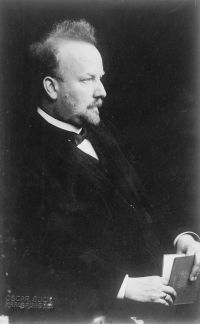
Ludwig Feuerbach

Biographical details

Portrait of Ludwig Feuerbach Ludwig Feuerbach,  The Essence of Christianity

“ But love is also the idealism of nature—love is also spirit, esprit. Love alone makes the nightingale a songstress; love alone gives the plant its corolla. And what wonders does not love work in our social life! What faith, creed, opinion separates, love unites. Love even, humorously enough, identifies the high noblesse with the people. What the old mystics said of God, that he is the highest and yet the commonest being, applies in truth to love, and that not a visionary, imaginary love—no! a real love, a love which has flesh and blood, which vibrates as an almighty force through all living. ”
Source: Gutenberg

Portrait of Ludwig Feuerbach Ludwig Feuerbach,  The Essence of Christianity — Chapter VIII. The Mystery of the Cosmogonical Principle in God (1841)

“ The consciousness of the world is a humiliating consciousness; the Creation was an “act of humility;” but the first stone against which the pride of egoism stumbles, is the thou, the alter ego. The ego first steels its glance in the eye of a thou, before it endures the contemplation of a being which does not reflect its own image. My fellow-man is the bond between me and the world. I am, and I feel myself, dependent on the world, because I first feel myself dependent on other men. If I did not need man, I should not need the world. I reconcile myself with the world only through my fellow-man. ”
Source: Wikisource

Portrait of Ludwig Feuerbach Ludwig Feuerbach,  The Essence of Christianity — Chapter IV. The Mystery of the Incarnation… (1841)

“ Happiness lies in the mere sight of the beloved one. The glance is the certainty of love. And the Incarnation has no other significance, no other effect, than the indubitable certitude of the love of God to man. Love remains, but the incarnation upon the earth passes away: the appearance was limited by time and place, accessible to few; but the essence, the nature which was manifested, is eternal and universal. We can no longer believe in the manifestation for its own sake, but only for the sake of the thing manifested; for to us there remains no immediate presence but that of love. ”
Source: Wikisource

Get perspective with Kwize: daily news enlightened by great literature