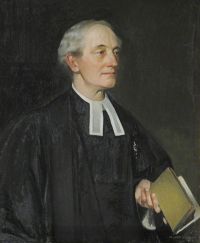
Walter Alison Phillips

Biographical details

Walter Alison Phillips,  1911 Encyclopædia Britannica, Volume 8… (1911)

“ The similarity of the Northern and Oriental snake myths seems to point to some common origin in an antiquity too remote to be explored. Whatever be the origin of the Northern dragon, the myths, when they first become articulate for us, show him to be in all essentials the same as that of the South and East. He is a power of evil, guardian of hoards, the greedy withholder of good things from men; and the slaying of a dragon is the crowning achievement of heroes—of Siegmund, of Beowulf, of Sigurd, of Arthur, of Tristram—even of Lancelot, the beau idéal of medieval chivalry. ”
Source: Wikisource

Walter Alison Phillips,  1911 Encyclopædia Britannica (1911)

“ Modern history knows no more tragic figure than that of Alexander. The brilliant promise of his early years; the haunting memory of the crime by which he had obtained the power to realize his ideals; and, in the end, the terrible legacy he left to Russia: a principle of government which, under lofty pretensions, veiled a tyranny supported by spies and secret police; an uncertain succession; an army permeated by organized disaffection; an armed Poland, whose hunger for liberty the tsar had whetted but not satisfied; the quarrel with Turkey, with its alternative of war or humiliation for Russia ”
Source: Wikisource

Walter Alison Phillips,  1911 Encyclopædia Britannica, Volume 19… (1911)

“ He was offended by Napoleon's bitter letters and by tales of his slighting comments on himself; he was alarmed by the emperor's scarcely veiled threats; but after all he was a child of the Revolution and a born soldier, with all the soldier's instinct of loyalty to a great leader, and he grasped eagerly at any excuse for believing that Napoleon, in the event of victory, would maintain him on his throne. ”
Source: Wikisource

Get perspective with Kwize: daily news enlightened by great literature