Mehemet Ali

Definition and stakes

Francis L. Griffith, Reginald Poole, David Margoliouth, Frank Richardson Cana, Edward Poole, Stanley Lane-Poole, Donald Wallace, George Clarke and Robert Vetch 1911 Encyclopædia Britannica (1911)

By this revolutionary method of land “nationalization” Mehemet Ali became proprietor of nearly all the soil of Egypt, an iniquitous measure against which the Egyptians had no remedy. The attempt which in this year (1815) the pasha made to reorganize his troops on European lines led, however, to a formidable mutiny in Cairo. Mehemet Ali’s life was endangered, and he sought refuge by night in the citadel, while the soldiery committed many acts of plunder.
Source: Wikisource

A. S. Rappoport History of Egypt From 330 B.C. To the Present Time…

A man without learning and surrounded by barbarian soldiers, Mehemet Ali appears before the world as nature made him. Dissimulation, diplomacy, and deceit, coupled with capability, great courage, genius, and much perseverance, brought him to the head of the government of Egypt. To gain his ends he flattered the powerful Ulemas who were the nation’s representatives to the sultan, but, once having obtained his object, he dismissed them.
Source: Gutenberg

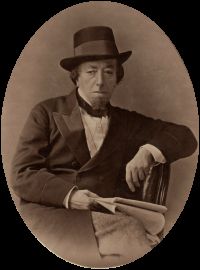
Portrait of Benjamin Disraeli Benjamin Disraeli Tancred — Chapter XXXII. Suspense (1847)

I had faith in Mehemet Ali, but he is a Turk, and that upset him. If, instead of being merely a rebellious Pasha, he had placed himself at the head of the Arabs, and revived the Caliphate, you would have seen something. Head the desert and you may do anything. But it is so difficult. If you can once get the tribes out of it, they will go anywhere. See what they did when they last came forth. It is a simoom, a kamsin, fatal, irresistible. They are as fresh, too, as ever. The Arabs are always young; it is the only race that never withers.
Source: Wikisource

Get perspective with Kwize: daily news enlightened by great literature