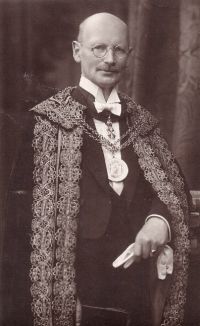
Arthur Cushman McGiffert, Albert Hauck, and Walter Alison Phillips

Biographical details

Arthur Cushman McGiffert, Albert Hauck, and Walter Alison Phillips 1911 Encyclopædia Britannica, Volume 6… (1911)

Other barbarians became Christian, some in their own homes beyond the confines of the Empire, some within the Empire itself, so that when the hegemony of the West passed from the Romans to the barbarians the Church lived on. Thenceforth for centuries it was not only the chief religious, but also the chief civilizing, force at work in the Occident. Losing with the dissolution of the Western Empire its position as the state church, it became itself a new empire, the heir of the glory and dignity of Rome, and the greatest influence making for the peace and unity of the western world.
Source: Wikisource

Arthur Cushman McGiffert, Albert Hauck, and Walter Alison Phillips 1911 Encyclopædia Britannica, Volume 6… (1911)

While the Church, like a careful mother, sought to lead her children, never allowed to grow up, safely from time into eternity, the men of the Renaissance felt that they had come of age, and that they were entitled to make themselves at home in this world. They wished to possess the earth and enjoy it by means of secular education and culture, and an impassable gulf yawned between their views of religion and morality and those of the Church.
Source: Wikisource

Get perspective with Kwize: daily news enlightened by great literature