Bastia

Definition and stakes

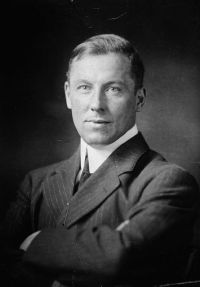
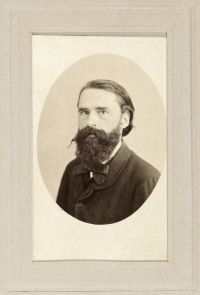
Portrait of Robert W. Service Robert W. Service,  The poisoned paradise: A romance of Monte Carlo (1922)

“ The grey cubes piled against the mountain brightened into tall houses still locked in sleep. Presently, with a fore-glow of citron, the clear rim of the sun cut the sea-line; and the sea became jade green. The air was diamond pure; the mountains took on colour; and Bastia awakened to another careless day.
High caserne-like houses, massive-walled and stucco-fronted; shabby shops half a century behind the times; mustiness and age; cigarettes, vendetta knives, and goat-flesh,—these were some of Hugh’s first impressions of Bastia.
”
Source: Gutenberg

Gertrude Forde,  A Lady's Tour in Corsica, Vol. 2…

“ For miles on every side extended a vast unbroken plain, and the east coast lay before us spread out in sweeps of pale green marshy land, bright blue sea, and intersecting salt lakes. A little further on, Bastia herself came into view, standing white and picturesque against her brown rocks, and over her sunny sea, on which lay many a white-sailed vessel, unmoved by breath of wind or sway of tide in the hot calm of the June day, whilst the large village of Furriano, on an adjacent hill, looked greyly down from its cool green nest of foliage. ”
Source: Gutenberg

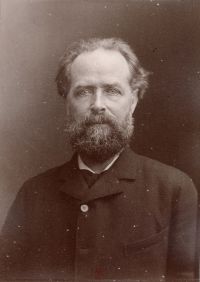
Portrait of Ferdinand Gregorovius Ferdinand Gregorovius,  Wanderings in Corsica: Its History and Its Heroes…

“ The town ascends in terraces above the harbour; its houses are high, crowded together, tower-shaped, and have many balconies: away beyond the town rise the green hills, with some forsaken cloisters, beautiful olive-groves, and numerous fruit-gardens of oranges, lemons, and almonds.
Bastia has its name from the fortifications or bastions, erected there by the Genoese. The city is not ancient; neither Pliny, Strabo, nor Ptolemy, mentions any town as occupying its site. Formerly the little marina of the neighbouring town of Cardo stood here.
”
Source: Gutenberg

Get perspective with Kwize: daily news enlightened by great literature