The clarinet, a single-reed woodwind instrument characterized by a cylindrical bore and flared bell, is the most prevalent member of a broad family ranging from contrabass to piccolo. Its development from the 18th-century chalumeau, through advancements such as Johann Denner’s register key and Iwan Müller’s airtight pads, demonstrated its adaptability. Writers like Esther Singleton commended its expressive range, from deep, foreboding tones to sharp, high notes, while Ben Hecht compared its sound to "whimsical insanity" and emotional turbulence.
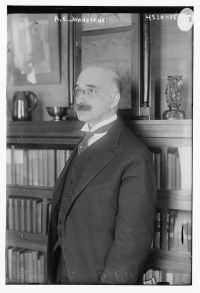
Arthur Edward Johnstone emphasized its "limpid quality," and W. J. Henderson observed its dexterity and function within orchestral harmony. The clarinet’s acoustic construction and technical improvements, including the Boehm system, have solidified its position as a fundamental instrument in classical, jazz, and modern music, uniting technical accuracy with emotional depth.
 Ben Hecht,
A Thousand and One Afternoons in Chicago
Ben Hecht,
A Thousand and One Afternoons in Chicago