Scherzo

Definition and stakes

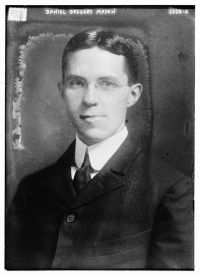
Portrait of Daniel Gregory Mason Daniel Gregory Mason,  The Appreciation of Music - Vol…

“ This time the ruggedness of the second strain of the scherzo has all disappeared, and it remains delicate, almost ethereal, through measures 258 to 330, with which the scherzo proper ends. As has been stated, no complete pause is reached before the finale, but instead of the cadence we have placed at the end, there is a long passage leading over into the splendid march-like theme of the last movement. ”
Source: Gutenberg

Paul Rosenfeld,  Musical Portraits : Interpretations of Twenty Modern Composers

“ Indeed, he is of the modern masters one of those the most conscious of the tradition of his art. He falls heir to Bach and to Haydn and to Beethoven quite as much as any living musician. Quite as much as that of any other his music is an image of the time. In the quartet, his magistral work, the Hebraic element is only one of several. The trio of the scherzo is like a section of some Polynesian forest, with its tropic warmth, its monstrous growths, its swampy earth, its chattering monkeys and birds of paradise. There is the beat of the age of steel in the finale. ”
Source: Gutenberg

A Dictionary of Music and Musicians (1900)

“ The examination of the different varieties of the scherzo will be treated elsewhere (Scherzo) ; it will be sufficient here to explain that the difference between the minuet and the scherzo is one of character rather than of form. The time is frequently quicker; the rhythm is more varied (see, for instance, the scherzi in Beethoven's 4th Symphony, in the Sonata, op. 28, and in the Bagatelle, op. 33, No. 2) ; and sometimes, as in the 7th and 9th Symphonies, the form itself is enlarged. Still Beethoven does not entirely abandon the older minuet. ”
Source: Wikisource

Get perspective with Kwize: daily news enlightened by great literature