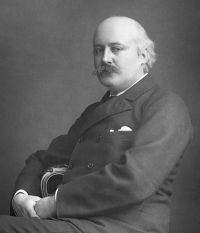
Alexander Teetgen

Biographical details

Alexander Teetgen,  Beethoven's Symphonies Critically Discussed

“ Methinks, on its heavenliest of dreams, in view of that suggested sea of immortality, Beethoven's own spirit might pass away; had a sanctioned longing so to do; not in misanthropic disgust (nothing Byronic, à la Manfred) but at peace—with all, all. This is the celestial Nunc Dimittis: the life and worship, including work, in the temple—this infinite—is over; the Messiah is come; higher life dawns upon men—therefore, "Lord, now lettest thou thy servant depart in peace!"
It is impossible to express, only possible in some sort to feel, the unfathomable peace shadowed forth in this music.
”
Source: Gutenberg

Alexander Teetgen,  Beethoven's Symphonies Critically Discussed

“ Beethoven almost at his best—a true foreshadower of the Beethoven—as much as to say, I am Beethoven, in spite of Haydn, my very good master, and Mozart. We see the giant waking. About the next motiv I hardly know what to say. In one mood it strikes me, like many other things even in Beethoven, as an incongruity; I think, "Why all at once this pastoral strain in the middle of a warlike defiance!" Such unconsciousness as this is an error. A genius must be an artist as well; and a man has no right to fling the first idea that occurs to him into a piece, which is incongruous with the whole. ”
Source: Gutenberg

Alexander Teetgen,  Beethoven's Symphonies Critically Discussed

“ Every one has observed how the very creak of a door may sometimes rise into music. And the whole world goeth up in music, swelling the symphony of the spheres. But, from these ground tones—these universal hints to their human expression and counterpart in the "father of all such as handle the harp and organ," was a long, long way. Nature waited to produce her mouthpiece, Man, to manifest herself forth in that prolongation of herself which we call human nature. ”
Source: Gutenberg

Get perspective with Kwize: daily news enlightened by great literature