“ Herr Joseph Haydn, the favorite of the nation, whose gentle character is reflected in every one of his pieces. His [65] compositions possess beauty, symmetry, clearness, and a delicate and noble simplicity, which impress themselves upon the listener even before he has become specially attentive. His quartets, trios and other works of this class are like a pure, clear strip of water, ruffled by a southern breeze, quickly agitated and rolling with waves but preserving its depth. The doubling of the melody by octaves originated with him and one can not deny its charm. ”
Joseph Haydn
Definition and stakes
Joseph Haydn (1732–1809), an Austrian composer of the Classical period, is celebrated as the "Father of the Symphony" and "Father of the String Quartet." His pioneering contributions to musical form and structure transformed chamber music and orchestral composition. Authors like Ludwig Nohl praised his works for their "delicate and noble simplicity," while Thomas Tapper emphasized his diligence and early mentors.
Herbert F. Peyser observed Haydn's progressive development into a master of symphonies and chamber music. Despite his modest beginnings and somewhat isolated creative environment, Haydn's legacy persists through his innovative compositions and influence on later composers, securing his place as a key figure in Western classical music.
Quotes about “Joseph Haydn”
“ Thus, from every point of view, Joseph Haydn stands before us an original, well defined personality, passing, as his life-long bearing [76] shows us, from an artificial and unnatural time in every way, to a period of the renewed free assertion of individuality and its involuntary expression of feeling. He tells us with the utmost naivete, that it was not composition but inclination and enthusiasm that had been his inspiration. “Haydn always sketched out his works at the piano,” says Griesinger. ”
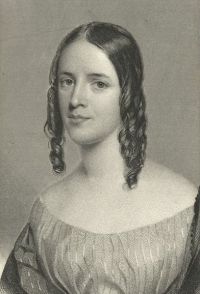 E. F. Ellet,
Nouvellettes of the musicians
(1851)
E. F. Ellet,
Nouvellettes of the musicians
(1851)
“ Joseph Haydn? How do you know? Speak!” cried both gentlemen to the friseur, who proceeded to inform them of Haydn’s abode and seclusion in the house of Wenzel Puderlein; nor did the exjourneyman lose the opportunity of bepowdering his ancient master plentifully with abuse, as an old miser, a surly fool, and an arch tyrant.“Horrible!” cried his auditors, when Ignatz had concluded his story. “Horrible! This old friseur makes the poor young man, hidden from all the world, labor to gratify his avarice, and keeps him prisoner! We must set him at liberty.” ”
Related terms
Authors who wrote about “Joseph Haydn”
J. Cuthbert HaddenLudwig NohlHerbert F. PeyserWilliam Henry HadowJohn F. Runciman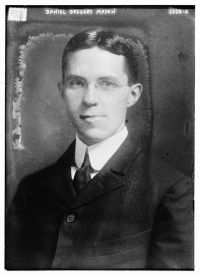 Daniel Gregory Mason
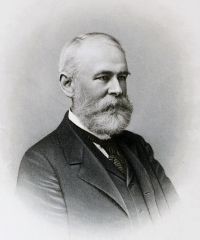 George Lansing RaymondFrancis Jameson Rowbotham
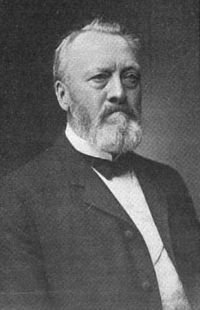 W. S. B. MathewsWilley Francis Gates
 Sarah Margaret FullerMinna Sophie Marie Baumann DownesGeorge T. FerrisOlive Brown Horne
 Walter Raymond SpaldingVariousThomas TapperE. F. Ellet
 James HunekerEsther Singleton
Daniel Gregory MasonGeorge Lansing RaymondFrancis Jameson RowbothamW. S. B. MathewsWilley Francis GatesSarah Margaret FullerMinna Sophie Marie Baumann DownesGeorge T. FerrisOlive Brown HorneWalter Raymond SpaldingVariousThomas TapperE. F. ElletJames HunekerEsther Singleton