Summary

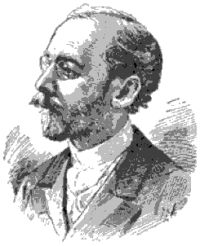
Portrait of Louis Adolphe Coerne Louis Adolphe Coerne The Evolution of Modern Orchestration

Bach still lives, but we can enjoy his works only as exceptions to our current diet; Haydn symphonies sound like string quartets played a trifle large and seasoned with a few notes of trumpets and wood-wind. Mozart in feminine phrase is 'too sweet for any use,' and Mendelssohn has departed to the place where good boys go. We have left to us the over-worked immortal nine of Beethoven (now rather shrunk to five) and two of Schubert; we tolerate Schumann for the sake of his ideas. We hear Tschaikowsky because he is a master in his way.
Source: Gutenberg

Portrait of Louis Adolphe Coerne Louis Adolphe Coerne The Evolution of Modern Orchestration

Opera, symphony, chamber and church music alike blossomed and ripened at his magic touch; and the tonal tints of his scoring assumed a mellow guise foreign to the lighter shading of Haydn's orchestration. Mozart was a cosmopolitan in so far as that he moulded his polyphony, formal structure and orchestration in accordance with the classicism of Teutonic lineage, imbibed the limpid suavity of Italian melody, and adapted the tragic energy and emotional interpretation of the text as initiated by Gluck in France.
Source: Gutenberg

Portrait of Louis Adolphe Coerne Louis Adolphe Coerne The Evolution of Modern Orchestration

The highest ideals of German opera culminated in the music dramas of Wagner. As musician, poet, dramatist, and master of scenic effects and theatrical requirements, he grew to be the champion of national art, a self-appointed reformer not alone of opera as an end to itself, but as a means whereby the conditions of social life might be inspired and uplifted. And the remarkable concentration of his musical thought, his rare gifts as a poet, and his noble histrionic conceptions proved him worthy of the task.
Source: Gutenberg

Get perspective with Kwize: daily news enlightened by great literature