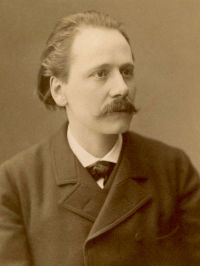
Georges Bizet

Definition and stakes

Various authors The Yellow Book (1894)

He is inspired or he is not. He has genius or he has not. If he has, we welcome him; if he has not, we can at most respect him, if we do not pity and forget him."
He was the same in all things: "I have no comrades," he said, "only friends." And there is one sentence that he wrote from Rome that might well be held up to the gamins of the French Conservatoire. "Je ne veux rien faire de chic; je veux avoir des idlèes avant de commencer un morceau."
In August of his second year Bizet left Rome on a visit to Naples.
Source: Wikisource

Various authors The Yellow Book (1894)

This, then, is what Rome did for Bizet; but, be it said, for Bizet très jeune encore. For a time the result is patent in his work, but afterwards there comes, although no revulsion, a distinct variation of feeling, which has in it something of compromise. The genius innate in him was inspirational before it was if it ever was erudite. Even in his later days there was for him no cowering before his culture. In 1867 he wrote in the Revue Natlonale—the only critique, by the way, he ever wrote—under the pseudonym of Gaston de Betzi: "The artist has no name, no nationality.
Source: Wikisource

Portrait of Jules Massenet Jules Massenet My Recollections

My wife has just put Marie Magdeleine under lock and key!
That detail is eloquent, is it not?
The devil! You've become singularly disturbing.
As to that, believe me that no one is more sincere in his admiration and in his affection than your,
BIZET.
That is the testimony of my excellent comrade and affectionate friend, George Bizet—a friend and comrade who would have remained steadfast had not blind destiny torn him from us in the full bloom of his prodigious and marvelous talent.
Source: Gutenberg

Get perspective with Kwize: daily news enlightened by great literature