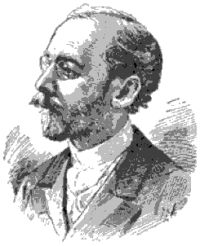
Nikolay Rimsky-Korsakov

Biographical details

Nikolay Rimsky-Korsakov,  Principles of Orchestration, with Musical Examples Drawn from His Own Works

“ A work is thought out in terms of the orchestra, certain tone-colours being inseparable from it in the mind of its creator and native to it from the hour of its birth. Could the essence of Wagner's music be divorced from its orchestration? One might as well say that a picture is well drawn in colours.
More than one classical and modern composer has lacked the capacity to orchestrate with imagination and power; the secret of colour has remained outside the range of his creative faculty.
”
Source: Gutenberg

Nikolay Rimsky-Korsakov,  Principles of Orchestration, with Musical Examples Drawn from His Own Works

“ Certain moments may require great volume of orchestral tone, so great that a voice of even phenomenal power is incapable of being heard. Even if the singer is audible, such unequal struggles between voice and orchestra are most inartistic, and the composer should reserve his orchestral outbursts for the intervals during which the voice is silent, distributing the singer's phrases and pauses in a free and natural manner, according to the sense of the words. If a prolonged forte passage occurs in the orchestra it may be used concurrently with action on the stage. ”
Source: Gutenberg

Nikolay Rimsky-Korsakov,  Principles of Orchestration, with Musical Examples Drawn from His Own Works

“ He who undertakes such work should enter as deeply as he may into the spirit of the composer, try to realise his intentions, and develop them in all their essential features.
Though one's own personality be subordinate to that of another, such orchestration is nevertheless creative work. But on the other hand, to score a composition never intended for the orchestra, is an undesirable practice.
”
Source: Gutenberg

Get perspective with Kwize: daily news enlightened by great literature