Summary

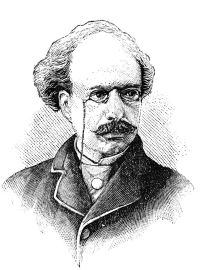
Portrait of Edmond Dupouy Edmond Dupouy Medicine in the Middle Ages

Have you fear that these poor frightened women have not suffered enough already? Think you they can have more misery than that they already suffer? Ah! my friends, even though they merited punishment, rest assured of one thing, that their disease is enough.” Beautiful words, worthy of a grand philosopher. Born in the sixteenth century, he believed in magic and sorcery; but as a physician he pleaded for the saving of human life, and as a man he frowned down the crimes committed on the scaffold. “The duty of the monk,” says he, “is to study how to cure the soul rather than to destroy it.”
Source: Gutenberg

Portrait of Edmond Dupouy Edmond Dupouy Medicine in the Middle Ages

It is a chef d’œuvre of spirit, malice, comedy, and naivete, in which medicine is found in every scene, either in the simulation of disease, with consultations, with drugs, and, most amusing of all, the eternal ingratitude of the sick.
All the educated world knows the subject of Master Pathelin: A lawyer without a case or client; a man living on his wits and expedients, making dupes and yet retaining a certain degree of professional correctness in his language and his artifices. Guillemette, his wife, is his worthy accomplice.
Source: Gutenberg

Portrait of Edmond Dupouy Edmond Dupouy Medicine in the Middle Ages

The torch of science was extinguished; the sacred fire on the altar of learning only remained a flickering emblem whose pale light was carefully guarded in the chapel of monasteries. Medicine was abandoned to the priests, and all practice naturally fell into an empirical and blind routine. “The physician-clergy,” says Sprengel, “resorted in the majority of cases to prayers and holy water, to the invocations of saints and martyrs, and inunction with sacred ointments. These monks were unworthy of the name of doctor—they were, in fact, nothing else than fanatical hospital attendants.”
Source: Gutenberg

Get perspective with Kwize: daily news enlightened by great literature