Summary

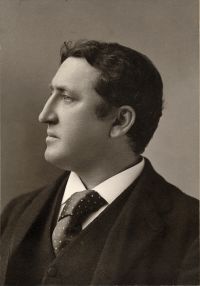
Portrait of James Huneker James Huneker Old Fogy: His Musical Opinions and Grotesques

And you, sir, with your thunderous and grandiloquent Liszt Ballade, do you call that pianoforte music, that constant striving for an aping of orchestral effects? Out upon it! It is hollow music—music without a soul. It is easier, much easier, to play than a Mozart sonata, despite all its tumbling about, despite all its notes. You require no touch-discrimination for such a piece. You have none. In your anxiety to compass a big tone you relinquish all attempts at finer shadings—at the nuance, in a word.
Source: Gutenberg

Portrait of James Huneker James Huneker Old Fogy: His Musical Opinions and Grotesques

Bach could spin music as a spider spins its nest, from earth to the sky and back again. Did you ever hear Rubinstein play the B-flat Prelude and Fugue? If you have not, count something missed in your life. He made the prelude as light as a moonbeam, but there was thunder in the air, the clouds floated away, airy nothings in the blue, and then celestial silence. Has any modern composer written music in which is packed as much meaning, as much sorrow as may be found in the B-flat minor Prelude? It is the matrix of all modern musical emotion.
Source: Gutenberg

Portrait of James Huneker James Huneker Old Fogy: His Musical Opinions and Grotesques

Alas! it is one of the bitter things of old age, one of its keen tortures, to listen to young people, to hear their superb boastings, and to know how short-lived is all art, music the most evanescent of them all. When I was a boy the star of Schumann was just on the rim of the horizon; what glory! what a planet swimming freely into the glorious constellation! Beethoven was clean obscured by the romantic mists that went to our heads like strong, new wine, and made us drunk with joy. How neat, dapper, respectable and antique Mendelssohn!
Source: Gutenberg

Get perspective with Kwize: daily news enlightened by great literature