“ We gaze deep into the very abyss, and discover new, whirling forms. It did not seem to be the strings of a piano that were sounding. No, every tone was like an echoing drop of water. Any one who admires the technic of art must bow before Liszt; he that is charmed with the genial, the divine gift, bows still lower. The Orpheus of our day has made tones sound through the great capital of machinery and a Copenhagener has said that 'his fingers are simply railroads and steam engines.' His genius is more powerful to bring together the great minds of the world than all the railroads on earth. ”
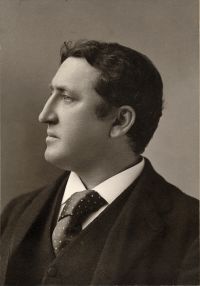
James Huneker
Summary
James Huneker’s Franz Liszt (1912) is a biographical and critical examination of the 19th-century virtuoso pianist and composer, exploring his revolutionary influence on music through his technical mastery, improvisational skill, and blending of Romantic expression with Hungarian folk traditions.
The text emphasizes Liszt’s role as an innovator, connecting the works of Beethoven and Wagner, while highlighting his dramatic concert style and contributions to orchestral and piano composition. Huneker underscores Liszt’s capacity to turn technical skill into transcendent artistry, portraying him as a visionary figure whose legacy redefined the limits of musical creativity.
Quotes from Franz Liszt (James Huneker)
“ Whatever the fluctuations of the chameleon of the Seven Arts, the best music will be always beautiful; beautiful with the old or the new beauty. Ugliness for the sheer sake of ugliness never endures; but one must be able to define modern beauty, else find oneself in the predicament of those deaf ones who could not or would not hear the beauty of Wagner; or those blind ones who would not or could not see the characteristic truth and beauty in the pictures of Edouard Manet. The sting and glamour of the Liszt orchestral music has compelling quality. ”
“ The Sarmatian melancholy of Paderewski, his deep sensibility, his noble nature, are translated into the music. Then with a smashing chord he sets us, the prisoners of his tonal circle, free. Is this the art of a hypnotiser? No one has so mastered the trick, if trick it be.But he is not all moonshine. The truth is, Paderewski has a tone not as large as mellow. His fortissimo chords have hitherto lacked the foundational power and splendour of d'Albert's, Busoni's, and Rosenthal's. His transition from piano to forte is his best range, not the extremes at either end of the dynamic scale. ”
