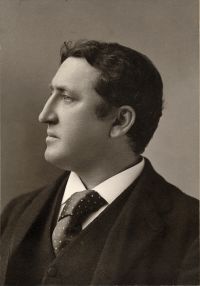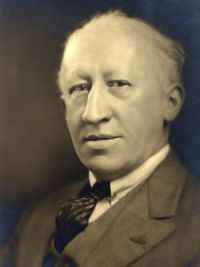
Ernest Newman

Biographical details

Portrait of Ernest Newman Ernest Newman Musical Studies

Is it not more reasonable to believe that music first came into the world when the savage took delight in any tones—those of the human voice, of a reed, or of a drum—purely as tone, and began to take a further simple delight in the relations between tones? Need we concern ourselves at all with speech, excited or torpid? Can we not begin with mere feeling venting itself in mere sound—as we know it must have done at first—and draw a line from this straight through all the music of all the world?
Source: Gutenberg

Portrait of Ernest Newman Ernest Newman Wagner as Man & Artist

Vastness is a quality inseparable from any concept of a god; but can the grandest creation of sculpture or the most heroic of stage figures ever hope to give us such a sense of the illimitable power and beauty of godhead as the imagination can supply? Whose god comes nearest to filling the earth with his presence—the invisible one of Milton or Spinoza, or the visible Wotan of Wagner? Does not the least analytical spectator of a Wagnerian opera often feel that it would have been better if the composer had insisted less on material facts upon the stage and left our imagination a freer wing?
Source: Gutenberg

Portrait of Ernest Newman Ernest Newman Wagner as Man & Artist

Never before had any composer dreamed of an opera so rich in all varieties of emotion, of action, of atmosphere. The practice he had in the Rhinegold developed his powers still further: in the Valkyrie the painting grows surer and surer, the imagination sweeps on to conceptions beyond anything that any musician before him would have thought possible: in Siegfried there is an absolute exultation of style; the music seems to dance and cry aloud out of pure joy in its own strength and beauty.
Source: Gutenberg

Get perspective with Kwize: daily news enlightened by great literature