Summary

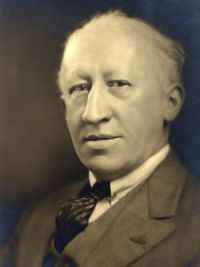
Portrait of Ernest Newman Ernest Newman Wagner as Man & Artist

Vastness is a quality inseparable from any concept of a god; but can the grandest creation of sculpture or the most heroic of stage figures ever hope to give us such a sense of the illimitable power and beauty of godhead as the imagination can supply? Whose god comes nearest to filling the earth with his presence—the invisible one of Milton or Spinoza, or the visible Wotan of Wagner? Does not the least analytical spectator of a Wagnerian opera often feel that it would have been better if the composer had insisted less on material facts upon the stage and left our imagination a freer wing?
Source: Gutenberg

Portrait of Ernest Newman Ernest Newman Wagner as Man & Artist

Tannhäuser was "the spirit of the whole Ghibelline race for every age, comprehended in a single, definite, infinitely moving form; but at the same time a human being right down to our own day, right into the heart of an artist full of life's longing." [405] "Lohengrin sought the woman who should have faith in him; who should not ask who he was and whence he came, but should love him as he was, and because he was what he appeared to himself to be. He sought the woman to whom he should not have to explain or justify himself, but who would love him unconditionally.
Source: Gutenberg

Portrait of Ernest Newman Ernest Newman Wagner as Man & Artist

It is no paradox to say that though Wagner was irresistibly impelled to express himself in the form of opera he was by nature an instrumental composer of the line of Bach and Beethoven. It is the orchestra that always bears the main burden of expression in his later works. His ideal was a stream of endless melody in the orchestra, to the moods of which the words give a definiteness unattainable by music alone.
Source: Gutenberg

Get perspective with Kwize: daily news enlightened by great literature