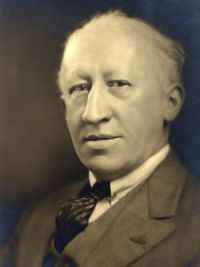
Ernest Newman

Ernest Newman

Summary

Portrait of Ernest Newman Ernest Newman Musical Studies

According to the line of his emotion, so to speak, is the line of his music—the pure feeling takes hold of the sounds through which alone it can utter itself, and shapes them, in form, in colour, in sequence, in intensity, after its own image. We have in primitive man, in a rude and undeveloped stage, all these elements out of which the modern music-maker builds his gorgeous palaces. According to the intensity of the emotion of the savage will be the width of the intervals of his voice, the resonance, the colour of it; according to the shade of his feeling will be the shade of his rude melody
Source: Gutenberg

Portrait of Ernest Newman Ernest Newman Musical Studies

Is it not more reasonable to believe that music first came into the world when the savage took delight in any tones—those of the human voice, of a reed, or of a drum—purely as tone, and began to take a further simple delight in the relations between tones? Need we concern ourselves at all with speech, excited or torpid? Can we not begin with mere feeling venting itself in mere sound—as we know it must have done at first—and draw a line from this straight through all the music of all the world?
Source: Gutenberg

Portrait of Ernest Newman Ernest Newman Musical Studies

It is the prose of music—a grave, flexible, eloquent prose, the one instrument in the world that is suitable for the prose fiction in music that it is Strauss's destiny to develop. His style is nervous, compact, sinuous, as good prose should be, which, as it is related, through its subject-matter, more responsibly to life than is poetry, must relinquish some of the fine abandonment of song, and find its compensation in a perfect blend, a perfect compromise, of logic and rapture, truth and ideality.
Source: Gutenberg

Get perspective with Kwize: daily news enlightened by great literature