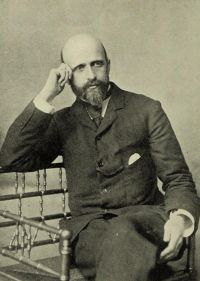
George Fielding Blandford (1829–1911), a British physician and psychiatrist, is best known for his seminal work Insanity and its Treatment (1871), a widely acclaimed text translated into German and revised through four editions. A leading expert on mental health legislation, Blandford’s career spanned private practice, hospital appointments, and academic lectures, combining clinical insight with psychological exploration.
His writings, including essays on the mind-body connection and mental illness, reflect a rigorous approach to diagnosing and preventing insanity, while his interdisciplinary interests in art, science, and literature highlight his comprehensive vision. Blandford’s legacy lies in bridging medical practice and psychological theory, shaping 19th-century understandings of mental health.

 George Fielding Blandford,
Popular Science Monthly
(1872)
George Fielding Blandford,
Popular Science Monthly
(1872)