Summary

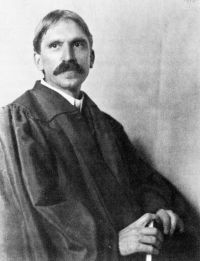
Portrait of John Dewey John Dewey Reconstruction in Philosophy

Pure reasoning as a means of arriving at truth is like the spider who spins a web out of himself. The web is orderly and elaborate, but it is only a trap. The passive accumulation of experiences—the traditional empirical method—is like the ant who busily runs about and collects and piles up heaps of raw materials. True method, that which Bacon would usher in, is comparable to the operations of the bee who, like the ant, collects material from the external world, but unlike that industrious creature attacks and modifies the collected stuff in order to make it yield its hidden treasure.
Source: Gutenberg

Portrait of John Dewey John Dewey Reconstruction in Philosophy

Philosophy has arrogated to itself the office of demonstrating the existence of a transcendent, absolute or inner reality and of revealing to man the nature and features of this ultimate and higher reality. It has therefore claimed that it was in possession of a higher organ of knowledge than is employed by positive science and ordinary practical experience, and that it is marked by a superior dignity and importance—a claim which is undeniable if philosophy leads man to proof and intuition of a Reality beyond that open to day-by-day life and the special sciences.
Source: Gutenberg

Portrait of John Dewey John Dewey Reconstruction in Philosophy

As something pervasive, interwoven with all the details of reflection and observation, with the plans and rules of behavior, it is impossible to call it back again. Yet, as best we can, we need to put before our minds a definitely enclosed universe, something which can be called a universe in a literal and visible sense, having the earth at its fixed and unchanging centre and at a fixed circumference the heavenly arch of fixed stars moving in an eternal round of divine ether, hemming in all things and keeping them forever at one and in order.
Source: Gutenberg

Get perspective with Kwize: daily news enlightened by great literature