Summary

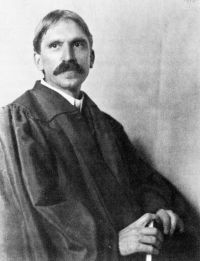
Portrait of John Dewey John Dewey Essays in Experimental Logic

The mistakes and failures resulting from inference constitute the ground for transition from natural spontaneous performance to a technique or deliberate art of inference. There is something humorous about the discussion of the problem of error as if it were a rare or exceptional thing—an anomaly—when the barest glance at human history shows that mistakes have been the rule, and that truth lies at the bottom of a well. As to inferences bound up with barely keeping alive, man has had to effect a considerable balance of good guesses over bad.
Source: Gutenberg

Portrait of John Dewey John Dewey Essays in Experimental Logic

No one doubts that the thinking of everyday practical life and of science is of this reflective type. We think about; we reflect over. If we ask what it is which is primary and radical to thought; if we ask what is the final objective for the sake of which thought intervenes; if we ask in what sense we are to understand thought as a derived procedure, we are plunging ourselves into the very heart of the logical problem: the relation of thought to its empirical antecedents and to its consequent, truth, and the relation of truth to reality.
Source: Gutenberg

Portrait of John Dewey John Dewey Essays in Experimental Logic

You, my realistic opponent, say that the doctrine of the external relation of terms expresses a ubiquitous mark of every genuine proposition or relational complex, and that this ubiquity is a strong presumption in favor of realism. Why so uneven, so partial, in your attitude toward ubiquitous relations? Is it perchance that you were so uneasy at our possession of a ubiquitous relation that gives a short cut to idealism that you felt you must also have a short cut to realism?
Source: Gutenberg

Get perspective with Kwize: daily news enlightened by great literature