Summary

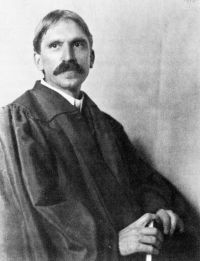
Portrait of John Dewey John Dewey Democracy and Education: An Introduction to the Philosophy of Education

How shall we secure breadth of outlook without sacrificing efficiency of execution? How shall we secure the diversity of interests, without paying the price of isolation? How shall the individual be rendered executive in his intelligence instead of at the cost of his intelligence? How shall art, science, and politics reinforce one another in an enriched temper of mind instead of constituting ends pursued at one another's expense? How can the interests of life and the studies which enforce them enrich the common experience of men instead of dividing men from one another?
Source: Gutenberg

Portrait of John Dewey John Dewey Democracy and Education: An Introduction to the Philosophy of Education

To produce or to make is to alter something; to consume is to alter. All the obnoxious characters of change and diversity thus attach themselves to doing while knowing is as permanent as its object. To know, to grasp a thing intellectually or theoretically, is to be out of the region of vicissitude, chance, and diversity. Truth has no lack; it is untouched by the perturbations of the world of sense. It deals with the eternal and the universal. And the world of experience can be brought under control, can be steadied and ordered, only through subjection to its law of reason.
Source: Gutenberg

Portrait of John Dewey John Dewey Democracy and Education: An Introduction to the Philosophy of Education

It is a commonplace to say that education should not cease when one leaves school. The point of this commonplace is that the purpose of school education is to insure the continuance of education by organizing the powers that insure growth. The inclination to learn from life itself and to make the conditions of life such that all will learn in the process of living is the finest product of schooling.
When we abandon the attempt to define immaturity by means of fixed comparison with adult accomplishments, we are compelled to give up thinking of it as denoting lack of desired traits.
Source: Gutenberg

Get perspective with Kwize: daily news enlightened by great literature