AI-generated from sources
The Perilous Balance of Spectacle, Art as Illusion and Evasion
In Brief
- Humanity possesses a fundamental need for imaginative spectacle and artistic illusion to transcend mundane reality and express creativity.
- While art offers a vital sanctuary and reprieve, it also risks devolving into dangerous escapism that dulls critical thought and impedes social progress.
- Critics of mass media, particularly cinema, argue that it can flatten human experience, reduce individuals to simulacra, and prioritize fleeting amusement over enlightenment.
- Despite the risks, a 'waking dream' perspective asserts that theatrical and artistic illusion can be a powerful vehicle for truth, fostering self-reflection and social change by demonstrating the logic of misfortune.
Main authors


The human appetite for dramatic spectacle stems from a profound need to access worlds beyond the immediate and the mundane. Art, in its various forms, offers a sanctuary for the imagination, a space where the dissonances of existence can be resolved and the harshness of life is softened by the ornaments of creative vision [1, 2]. From the earliest myths to the modern novel and theater, there is a persistent desire to see things not merely as they are, but as they ought to be . This impulse is not frivolous; it represents a fundamental drive for a creative outlet, a way to structure experience through beauty and narrative that, if unexpressed, can leave human life feeling impoverished and bare [4]. The creation of these 'private heavens' through music, poetry, and drama serves as a vital counterpoint to a reality often stripped of its grandeur and poetry [3].
However, this very power to create compelling illusions has long been viewed with suspicion. The reprieve offered by spectacle can easily devolve into a form of dangerous escapism, a flight from reality that ultimately proves debilitating [10]. Critics, particularly with the advent of cinema, have argued that such mass entertainment can flatten human experience, reducing individuals to mere simulacra and stripping life of its color and mystery [11]. The journey from a restorative, imaginative dream to a narcotic fantasy that obstructs moral and social progress is a short one [20]. The central tension, therefore, lies in navigating the fine line between art as a vital illusion that enriches our understanding of life and art as a superficial evasion that dulls our capacity to confront it.
The Sanctuary of Imagination, Art as Ideal and Reprieve
At its core, artistic creation serves as an essential outlet for the imaginative powers that lie dormant or constrained within the structures of daily life . This need for mythologies and idolatries is presented not as a weakness, but as a fundamental human requirement for a 'swing and verge' for creativity . In this conception, art provides access to a realm of ideals, answering a deep-seated aspiration for a harmony and beauty that reality often withholds [8]. Whether through music, theater, or literature, the spectacle allows individuals to momentarily become poets, reshaping the world according to a more satisfying aesthetic and moral order . Without these arts that appeal to our sense of beauty, human existence is portrayed as a far poorer, colder condition .
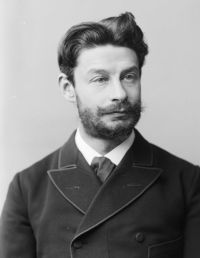
Art's function is often seen as building a bridge between the flawed, tangible world and an intangible, idealized one. Thinkers like Georg Brandes imagined this connection as a 'heavenly rainbow' woven from love and poetry, spanning the abyss that separates human life from its ideal form . The illusions crafted by artists possess a unique power to transfigure reality, animating historical ruins with the vibrant pageantry of life and song, thereby creating a vision more enduring than the physical reality itself [5]. This process is not a simple denial of the real world, but a profound re-imagining of it, an effort to resolve its dissonances into a greater harmony through the power of a gifted imagination .
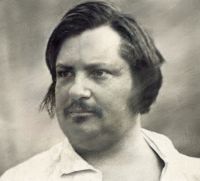
The psychological immersion in this illusory world provides a necessary reprieve from life's burdens. Writing in the 19th century, Honoré de Balzac described this state as a 'night to the mind', a dreamscape where the soul can soar into a world of fancies, liberated from the anxieties of past and future [6]. This temporary oblivion allows the artist, and by extension the audience, to focus purely on the aesthetic experience itself, finding solace in its self-contained perfection . This idea of illusion as an untamable and invincible force is central to Victor Hugo's thought, which posits that dreams are an inescapable part of human nature, compelling us to aspire and love beyond our immediate circumstances [7]. This drive for a 'visionary art', as championed by William Blake, seeks to transcend the mere imitation of nature to restore a more profound, imaginative mode of perception [9].
The Flight from Reality, Spectacle as Diversion and Degradation
A recurring critique of popular spectacle, particularly aimed at cinema, is that it fosters a detrimental flight from reality . Early 20th century commentators like Alexander Sutherland Neill argued that the mass appeal of film was symptomatic of a society finding life too ugly to face, with the day-dreams offered by the screen leading to no constructive social or personal action . This perspective casts the cinematic experience as fundamentally reductive, stripping life of its complexity and presenting audiences with a world of exaggerated, sub-human motives, accompanied by music designed to numb the senses to the underlying emptiness . The rise of digital entertainment has, for some contemporary critics, only intensified this trend, promoting a culture that values fleeting excitement over genuine understanding [12].
This focus on amusement over enlightenment is seen as a major factor in the degradation of dramatic arts [16]. The commercial imperative to appeal to a mass audience, which primarily seeks recreation rather than intellectual or moral instruction, creates a dynamic where the content cannot rise above the level of its average consumer [13]. This can result in what Gilbert Seldes termed 'bogus arts', which mimic the appearance of high culture to appeal to audience snobbery but are ultimately hollow, borrowing and spoiling what is good in more authentic popular forms [18]. The pressure to supply a constant stream of new material also leads to a reliance on pre-existing stories from novels and plays, which can introduce unwelcome hints of reality and its associated moral complexities into the otherwise sanitized world of the movies [14].
The consequences of this form of entertainment are often described as a dulling of moral and perceptual faculties. Writing of the stage, Charles Lamb noted a growing inability among audiences to maintain a 'dramatic interest', treating fictional scenarios with the same literal-minded severity as real-life vices, thereby collapsing the aesthetic distance necessary for art [17]. This blurring of lines is echoed in critiques of film producers who, by creating entirely artificial environments, miss the opportunity to forge a drama rooted in reality, instead offering layers of imitation [15]. For thinkers with a strong moral focus, such as Leo Tolstoy, this perversion of art's purpose makes it one of the greatest hindrances to the achievement of goodness in society . It encourages an endless chase after phantoms and shadows of beauty, deluding humanity in its pursuit of an ever-receding paradise [19].
The Waking Dream, Illusion as Revelation
Contrary to the view of art as mere escapism, a more nuanced perspective holds that illusion can be a potent vehicle for truth. August Wilhelm von Schlegel characterized theatrical illusion not as a literal deception but as a 'waking dream' into which the audience willingly enters [27]. True engagement is achieved when spectators are so engrossed that they forget their immediate surroundings, a process that requires an active, not a passive, imagination [29]. This state is made possible by the creation of aesthetic distance—the artificiality of the stage, for example, removes the action from the sphere of our own potential deeds, allowing us to contemplate events with dramatic interest rather than a compulsion to intervene [26]. This voluntary surrender to a constructed reality is what makes poetic form possible .
This detached mode of observation allows art to function as a space for profound self-reflection and confrontation with uncomfortable realities. Oscar Wilde observed that when a real-life tragedy contains artistic elements, we can become spectators of our own lives, finding a strange wonder in the drama of our own experience [23]. This duality of being both actor and observer is a unique psychological state facilitated by art. For Albert Camus, writing in the mid-20th century, the power of drama lies in its ability to demonstrate the inescapable logic of misfortune within a familiar, everyday context, transforming an improbable fate into a terrifying possibility and forcing us to recognize its potential in our own lives [25]. Similarly, Arthur Schopenhauer saw tragedy's purpose as bringing audiences face-to-face with suffering to reveal the ultimate vanity of human striving, thereby prompting a deeper philosophical understanding [24].
Beyond individual reflection, dramatic art can serve as a powerful catalyst for social awareness and change. Emma Goldman saw modern drama as a primary force in cultivating social discontent and challenging entrenched prejudice and superstition [28]. Art often functions as a mirror, reflecting the anxieties and hopes of its society, be it the discouragement of a declining class or the growing pains of a rising one [30]. Even mainstream film can serve this function by projecting a nation's collective feelings and public life onto the screen, allowing audiences to engage with dramas that resonate with their own experiences [22]. Friedrich Wilhelm Nietzsche suggested a more provocative role for art, positing that audiences may actively seek out depictions of pain, anger, and suspense, using the artist as a 'conjurer' of demons to jolt them out of their complacency and apathy [21]. In this view, spectacle becomes not an escape from life, but a tool for its deliberate intensification.
The dramatic spectacle exists in a state of profound and persistent tension. On one hand, it answers a fundamental human need for an imaginative realm that transcends the limitations of reality, a sanctuary where ideals can be explored and the creative spirit can find expression . This power to construct compelling illusions offers solace, beauty, and a necessary reprieve from the mundane. On the other hand, this same power makes spectacle vulnerable to becoming a tool of mass diversion, an escapist fantasy that can dull critical thought, cheapen emotion, and ultimately impede human progress by offering a superficial substitute for genuine experience . The cultural history of performance, from the stage to the screen, is defined by this oscillation between providing a meaningful, restorative vision and peddling a dehumanizing distraction .
Ultimately, the distinction between a vital illusion and a dangerous evasion lies not within the medium itself, but in the quality of engagement it demands from its audience. An illusion that provokes critical thought, unveils the hidden mechanics of human suffering, or holds a mirror to society's deepest concerns can function as a powerful instrument for revealing truth . The critical challenge for any audience is to differentiate the 'waking dream' that enhances our perception of the world from the narcotic slumber that merely offers a flight from it . As new forms of spectacle emerge in an age of increasingly sophisticated digital illusions , the capacity for this discernment remains the crucial factor in determining whether art will serve to elevate or diminish the human condition.