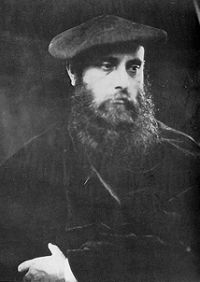
William Michael Rossetti

William Michael Rossetti

Summary

Portrait of William Michael Rossetti William Michael Rossetti Life of John Keats

The tale of Diana and Endymion was not to be a monument of classic antiquity re-stated in the timid, formal spirit of a school-exercise, but an invention of a poet and lover, who, acting under the spell of natural beauty, re-informs his theme with poetic fancy, amorous ardour, and Nature’s profusion of object and of imagery. And in this Keats thought—and surely he rightly thought—that he would be getting closer to the spirit of a Grecian myth than by any cut-and-dry process of tame repetition or pulseless decorum.
Source: Gutenberg

Portrait of William Michael Rossetti William Michael Rossetti Life of John Keats

Keats arraigns philosophy, and its power of stripping things bare of their illusions. No doubt a poet has a right to treat a legend of this sort from such point of view as he likes; it is for him, and not for his reader, to take the bull by the horns. But it does look rather like taking the bull by the weaker horn to contend that the philosopher who saves a youthful disciple from the wiles of a serpent is condemnably prosaic—a grovelling spirit that denudes life of its poetry.
Source: Gutenberg

Portrait of William Michael Rossetti William Michael Rossetti Life of John Keats

May your kind and gentle spirit be now mingling with those of Shakespeare and Milton, before whose minds you have so often bowed! May you be considered worthy of admission to share their musings in heaven, as you were fit to comprehend their imaginations on earth! Dear Keats, hail and adieu for some six or seven years, and I shall meet you. I have enjoyed Shakespeare more with Keats than with any other human creature.”
In writing to Miss Mitford, Haydon added:
“His ruin was owing to his want of decision of character, and power of will, without which genius is a curse.”
Source: Gutenberg

Get perspective with Kwize: daily news enlightened by great literature