Summary

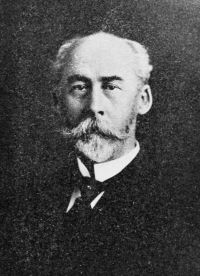
Portrait of William Henry Holmes William Henry Holmes Ancient art of the province of Chiriqui…

No single character and no one group of characters can be relied upon to distinguish the different groups. We must depend, therefore, upon an assemblage of characters or upon one character in one place and another in another place. Observing a number of striking differences in two groups of ware, we arrive at the conclusion that these groups must have been the work of distinct communities; yet we find very marked differences in wares that (through the possession in common of some particular feature) we know to be the work of the same hands.
Source: Gutenberg

Portrait of William Henry Holmes William Henry Holmes Ancient art of the province of Chiriqui…

Animal forms are freely employed, but in a rather rude way. The fish form is more generally used than any other, and is in all cases embodied in the legs of the vessel, the head joining the body of the vessel and the tail resting upon the ground. These representations exhibit all grades of elaboration from the fairly well modeled to the merest suggestion of animal character—any one feature, as the mouth, the eye, the fins, or the tail, being alone a sufficient suggestion of the creature to satisfy the potter and keep alive the idea of the fish.
Source: Gutenberg

Portrait of William Henry Holmes William Henry Holmes Ancient art of the province of Chiriqui…

It will be interesting, as additional examples are presented, to note the effect of modification upon particular features of the animal, to observe how some come into prominence, representing the creature and the idea, while others fall into disuse and disappear. In nature the line of the body is perhaps the most strongly characteristic feature, and it is in art the most persistent. It survives in the stems of many conventional devices from which all other suggestions of the animal have vanished.
Source: Gutenberg

Get perspective with Kwize: daily news enlightened by great literature