“ Francisco Pizarro's Career. BORN IN SHAME AND REARED AMONG SWINE, HE CONQUERS FAME AND FORTUNE IN PERU WITH THE SWORD—HISTORY OF A SELF-MADE MAN.BILL NYE.Perhaps the history of the western hemisphere has never furnished a more wonderful example of the self-made man than may be found in the person of Francisco Pizarro, a gentleman who came to America about 1510, intending to grow up with the country. ”
Francisco Pizarro
Definition and stakes
Francisco Pizarro, a Spanish conquistador, is renowned for his conquest of the Inca Empire in the 16th century. Born into poverty in Spain, he rose to prominence through bold expeditions, culminating in the capture of Atahualpa and the establishment of Lima. Historians and writers have long debated his legacy: Bill Nye hailed him as a self-made man, while Charles Morris acknowledged his military skill alongside his cruelty.
Prescott provided a detailed account of his campaigns, and Bancroft critiqued the idealized depictions of his actions. Pizarro’s story, marked by ambition and brutality, epitomizes the complex interplay of colonial drive and indigenous resistance, reflecting the turbulent era of Spanish expansion in the Americas.
Quotes about “Francisco Pizarro”
Charles Morris, Historic Tales: The Romance of Reality…
“ A faithless and cruel wretch was this Francisco Pizarro, but he had the military merits of courage, enterprise, daring and persistency, and these qualities carried him through sufferings and adversities that would have discouraged [pg 072] almost any man and brought him to magical success in the end. It was the beacon of gold that lured him on through desperate enterprises and deadly perils and led him to the El Dorado of the Spanish adventurers. ”
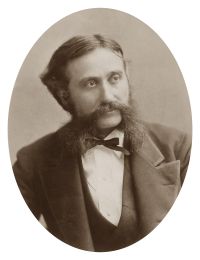 Hubert Howe Bancroft,
History of Central America, Volume 2…
Hubert Howe Bancroft,
History of Central America, Volume 2…
“ No greater monument of blind adulation is found in Spanish-American history than the Varones Ilvstres del Nvevo Mvndo, Madrid, 1639, of Pizarro y Orellana, a descendant of one of the great Pizarros. Not only the brutal Francisco Pizarro is made a saint, but the accounts of the eight heroes of the conquest, which occupy the greater part of a folio volume, are little else than a covering of defects by so-called glorious deeds, which serve besides the purposes of fame as a special plea for the confirmation of grants conferred upon the conqueror. ”
Related terms
Authors who wrote about “Francisco Pizarro”
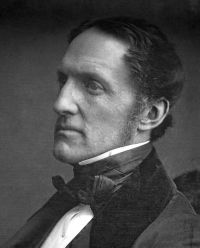 William Hickling Prescott
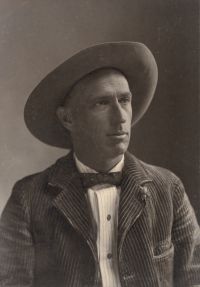 Charles Fletcher LummisRobert Grant Watson
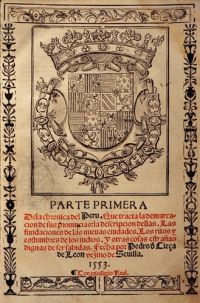 Pedro de Cieza de LeónHenrietta Christian WrightPascual de AndagoyaVarious
 Cyrus Townsend BradySamuel G. GoodrichRobert KerrCharles MorrisHubert Howe Bancroft
 George Chetwynd Griffith
 Harry Thurston Peck
 Bill Nye
 Adolph Francis Alphonse BandelierMiss CornerLeon H. Vincent
 William Henry Giles KingstonJr. Horatio Alger