Helium

Definition and stakes

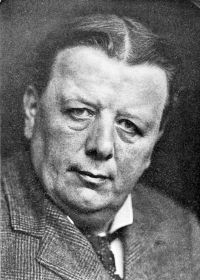
Portrait of Robert S. Ball Robert S. Ball,  The Earth's Beginning

“ But on applying the spectroscope to examine the character of the light which this gas emitted when submitted to the electric current, it yielded, to their amazement, the characteristic light of helium. Thus was the sun-element at last shown to be a terrestrial body, though no doubt a rare one. The circumstances that I have mentioned make helium for ever famous among the constituents of the universe. It will never be forgotten that though from henceforth it may be regarded as a terrestrial body, yet it was first discovered, not in the earth beneath our feet, but in the far-distant sun. ”
Source: Gutenberg

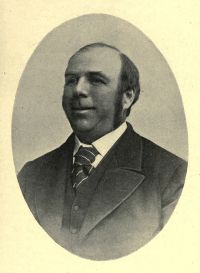
Portrait of John Joly John Joly,  The Birth-Time of the World and Other Scientific Essays

“ The radioactive atom in sinking to a lower
atomic weight casts out with enormous velocity an atom of helium.
It thus loses a definite portion of its mass and of its energy.
Helium which is chemically one of the most inert of the elements,
is, when possessed of such great kinetic energy, able to
penetrate and ionise the atoms which it meets in its path. It
spends its energy in the act of ionising them, coming to rest,
when it moves in air, in a few centimetres.
”
Source: Gutenberg

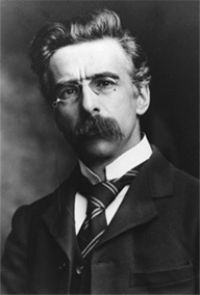
Portrait of Fritz Leiber Fritz Leiber,  Bread Overhead

“ Therefore, we of Puffyloaf are taking today what may be the ultimate step toward purity: we are aerating our loaves with the noble gas helium, an element which remains virginal in the face of all chemical temptations and whose slim molecules are eleven times lighter than obese carbon dioxide—yes, noble uncontaminable helium, which, if it be a kind of ash, is yet the ash only of radioactive burning, accomplished or initiated entirely on the Sun, a safe 93 million miles from this planet. ”
Source: Gutenberg

Get perspective with Kwize: daily news enlightened by great literature