Summary

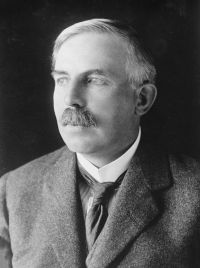
Portrait of Ernest Rutherford Ernest Rutherford The natural and artificial disintegration of the elements (1924)

This minute but massive nucleus is, in a sense, a world of its own which is little, if at all, influenced by the ordinary physical and chemical forces at our command. In many respects, the problem of nuclear structure is much more difficult than the corresponding problem of the arrangement and motions of the planetary electrons, where we have a wealth of available information, both physical and chemical, to test the adequacy of our theories. The facts known about the nucleus are few in number and the methods of attack to throw light on its structure are limited in scope.
Source: Gutenberg

Portrait of Ernest Rutherford Ernest Rutherford The natural and artificial disintegration of the elements (1924)

It is, however, at first sight rather surprising that no evidence of the individual existence of protons in a nucleus is obtained from a study of the transformations of the radioactive elements, where the processes occurring must be supposed to be of a very fundamental character. As far as our observations have gone, electrons and helium nuclei, but no protons, are ejected during the long series of transformations of uranium, thorium and actinium. One of the most obvious methods for determining the structure of a nucleus is to find a method of disintegrating it into its component parts.
Source: Gutenberg

Portrait of Ernest Rutherford Ernest Rutherford The natural and artificial disintegration of the elements (1924)

In a sense, all these nuclear masses would be radioactive, but some of them in their transformation may reach a stable configuration which would represent the nucleus of one of our surviving elements. If we suppose that nuclear masses over a wide range of mass can be formed before serious transformation occurs, it is easy to see how every possible type of stable element will gradually emerge. If we take the helium nucleus as a combining unit which emits in its formation the greatest amount of energy, we should ultimately expect many of the neutrons in a heavy nucleus to form helium nuclei.
Source: Gutenberg

Get perspective with Kwize: daily news enlightened by great literature