Ernest Rutherford

Biographical details

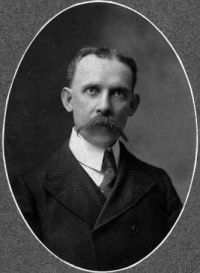
Portrait of Ernest Rutherford Ernest Rutherford,  Radio-Activity

“ The study of the radio-active substances and of the discharge of electricity through gases has supplied very strong experimental evidence in support of the fundamental ideas of the existing atomic theory. It has also indicated that the atom itself is not the smallest unit of matter, but is a complicated structure made up of a number of smaller bodies. ”
Source: Gutenberg

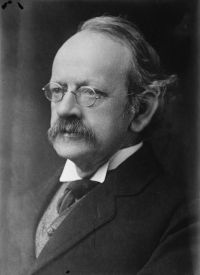
Portrait of Ernest Rutherford Ernest Rutherford,  The natural and artificial disintegration of the elements (1924)

“ In a sense, all these nuclear masses would be radioactive, but some of them in their transformation may reach a stable configuration which would represent the nucleus of one of our surviving elements. If we suppose that nuclear masses over a wide range of mass can be formed before serious transformation occurs, it is easy to see how every possible type of stable element will gradually emerge. If we take the helium nucleus as a combining unit which emits in its formation the greatest amount of energy, we should ultimately expect many of the neutrons in a heavy nucleus to form helium nuclei. ”
Source: Gutenberg

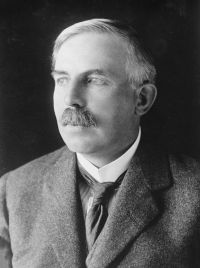
Portrait of Ernest Rutherford Ernest Rutherford,  The chemical nature of the alpha particles from radioactive substances (1908)

“ It must not be forgotten that uranium and thorium and each of their transformation products must be regarded as distinct chemical elements in the ordinary sense. They differ from ordinary elements in the comparative instability of their atomic systems. The atoms break up spontaneously with great violence, expelling in many cases an atom of helium at a high speed. All the evidence is against the view that uranium or thorium or radium can be regarded as an ordinary molecular compound of helium with some known or unknown element, which breaks up into helium. ”
Source: Gutenberg

Get perspective with Kwize: daily news enlightened by great literature