Summary

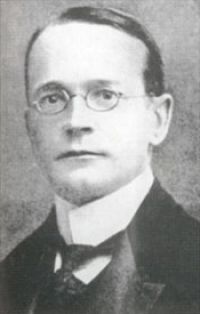
Portrait of Joseph McCabe Joseph McCabe The Story of Evolution — Chapter II. The Foundations of the Universe

In science we know nothing of a beginning. The question of the eternity or non-eternity of matter (or ether) is as futile as the question about its infinity or finiteness. We shall see in the next chapter that science can trace the processes of nature back for hundreds, if not thousands, of millions of years, and has ground to think that the universe then presented much the same aspect as it does now, and will in thousands of millions of years to come.
Source: Wikisource

Portrait of Joseph McCabe Joseph McCabe The Story of Evolution — Chapter II. The Foundations of the Universe

In any case, the ether, whether solid or fluid or granular, remains the fundamental reality. The universe does not float in an ocean of ether: it is an ocean of ether. But countless myriads of minute disturbances are found in this ocean, and set it quivering with the various pulses which we classify as forces or energies.
Source: Wikisource

Portrait of Joseph McCabe Joseph McCabe The Story of Evolution — Chapter II. The Foundations of the Universe

Modern science rediscovered the atoms of Democritus, analysed the universe into innumerable swarms of these tiny particles, and then showed how the infinite variety of things could be built up by their combinations. For this it was necessary to suppose that the atoms were not all alike, but belonged to a large number of different classes. From twenty-six letters of the alphabet we could make millions of different words. From forty or fifty different "elements" the chemist could construct the most varied objects in nature, from the frame of a man to a landscape.
Source: Wikisource

Get perspective with Kwize: daily news enlightened by great literature