Summary

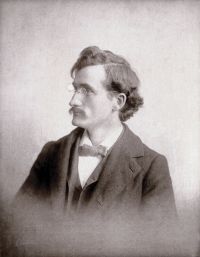
Portrait of L. H. Bailey L. H. Bailey The Country-Life Movement in the United States

The city sits like a parasite, running out its roots into the open country and draining it of its substance. The city takes everything to itself—materials, money, men—and gives back only what it does not want; it does not reconstruct or even maintain its contributory country. Many country places are already sucked dry.
The future state of the farmer, or real countryman, will depend directly on the kind of balance or relationship that exists between urban and rural forces; and in the end, the state of the city will rest on the same basis.
Source: Gutenberg

Portrait of L. H. Bailey L. H. Bailey The Country-Life Movement in the United States

I should assume that every person living on the land in the country has some one thing that he is sure is a contribution to better farming, or to better welfare; and he should be encouraged to exhibit it and to explain it, whether it is a new way to hang a hoe, or a herd of pure-bred cattle, or a plan for farmers' institutes. I should challenge every man to show in what respect he has any right to claim recognition over his fellows, or to be a part of his community.
Source: Gutenberg

Portrait of L. H. Bailey L. H. Bailey The Country-Life Movement in the United States

I have no desire that society (or government) engage in the middleman business or that it take over private enterprise; but no government can expect to throw back on the producer the responsibility of controlling the middleman. I look for the present agitation to awaken government to the necessity of doing what it is plainly its duty to do. In future, a government that will not protect its people in those cases in which the people, acting to the best of their individual and coöperating capacity, cannot protect themselves, will be known as either a bad government or an undeveloped government.
Source: Gutenberg

Get perspective with Kwize: daily news enlightened by great literature