AI-generated from sources
A Tangled Plume, Feathers in Evolution Culture and Conservation
In Brief
- Feathers represent a unique biological innovation, whose evolutionary origin from reptilian scales remains debated despite the discovery of ancient feathered animals like Archaeopteryx.
- Historically, feathers held deep cultural significance, serving as powerful symbols of spiritual power, divinity, and social status across numerous pre-industrial societies.
- During the 19th and early 20th centuries, the commercial demand for feathers, primarily for women's millinery, fueled a global trade that drove countless bird species to the brink of extinction.
- The widespread destruction caused by the feather trade was a primary catalyst for the modern conservation movement, leading to significant legislative victories and a fundamental shift in wildlife protection ethics.
Main authors
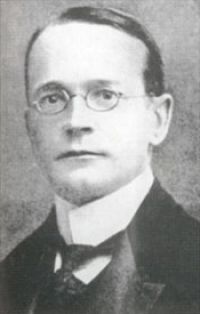
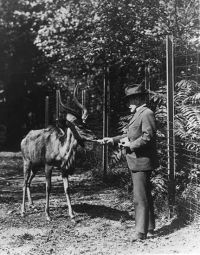

Feathers are the quintessential feature of avian life, a biological innovation that is at once beautiful and a marvel of engineering [3, 7]. Their evolutionary origin, however, remains a topic of scientific debate, with a prominent theory suggesting they developed from reptilian scales [1, 2]. While this connection is supported by general analogies such as molting, direct fossil evidence of a transitional stage has proven elusive, and embryological studies have presented conflicting observations [5]. The discovery of ancient feathered animals like the Jurassic-era Archaeopteryx has nevertheless confirmed the deep history of plumage, anchoring its development millions of years in the past [4]. Feathers are thus not merely a body covering but a complex biological archive that raises fundamental questions about the pathways of evolution.
Beyond their biological function, feathers have been deeply interwoven with the fabric of human civilization for millennia [11]. Across diverse cultures, they have served as potent symbols, ritual objects, and markers of status and power [12, 14]. This ancient human reverence for avian plumage, however, underwent a profound and destructive transformation with the rise of global commerce. In the modern era, feathers were commodified, feeding a voracious fashion industry that drove many bird species toward extinction [16, 23]. This shift from sacred artifact to commercial good marks a critical fracture in the relationship between humanity and the natural world, setting the stage for a dramatic conflict between exploitation and the nascent ideal of conservation [19, 25].
An Evolutionary Enigma and Structural Wonder
The precise evolutionary pathway of the feather remains a subject of considerable scientific speculation . The prevailing hypothesis posits an origin from reptilian scales, a theory grounded in the shared ancestry of birds and reptiles and supported by broad analogies like the process of shedding skin or feathers . However, some researchers, such as Apsley Cherry-Garrard in 1922, observed that early bird embryos show no clear evidence of a scale-to-feather transition, instead revealing the development of distinct papillae that form feather rudiments . Many scientific accounts still trace avian lineage to bipedal dinosaurs that may have used scaly forelimbs for balance during leaps, a motion that could have been a precursor to flapping flight . The lack of definitive intermediate fossils between a simple scale and a complex feather ensures this debate continues .
The fossil record, while incomplete, offers crucial insights into the ancient history of feathers. The discovery of a lone feather from the Jurassic period, followed by a nearly complete skeleton, led to the identification of Archaeopteryx, a name meaning "old wing" . This find irrevocably established the existence of feathered animals far earlier than previously understood. Conversely, examinations of other prehistoric reptiles, such as carnivorous dinosaurs, have yielded no evidence of feathers, suggesting that their skin was likely covered in another material [6]. This distinction highlights that while birds share a distant ancestry with dinosaurs, the evolution of plumage was a unique and highly specialized development .
A fully formed feather is an intricate structure, typically composed of a central shaft fringed with interlocking secondary rods that create a light yet strong surface . This design is a masterwork of natural engineering, combining qualities of elasticity, warmth, durability, and lightness . As the defining characteristic of the class Aves, feathers are indispensable to the avian way of life, enabling the flight that is central to most species [9]. The anatomical diversity of feathers is extensive, ranging from the large, perfectly formed flight feathers of the wing and tail to semiplumes, insulating down, and delicate filoplumes [8]. Each type is adapted for a specific function, collectively forming the contour and providing the capabilities of the bird .
The life of a bird is marked by the continuous growth and replacement of its plumage. From the moment of hatching, when many are covered in a fine down, birds undergo a succession of molts, gradually replacing smaller feathers with larger ones as they mature [10]. In some precocial species, the first wing feathers may even begin to grow before the chick has left the egg . Even among flightless birds like the ostrich, feathers persist, though they often take the form of downy plumes that lack the rigid structure required for flight, illustrating a clear adaptation to a terrestrial existence . Further variation can be seen in features like the aftershaft, a secondary shaft which, in birds such as the cassowary and emu, can be as large as the main one, showcasing the diverse evolutionary paths plumage has taken .
Symbols of Power, Divinity, and Status
In many pre-industrial societies, feathers were far more than simple ornaments; they were conduits of spiritual power and a medium for communicating with the divine [15]. For the Maya, the macaw was a sacred animal dedicated to the sun, and its feathers were revered accordingly [13]. This belief was widespread; across Polynesia, the red feathers of a particular small bird and the long tail-feathers of the man-of-war bird were thought to be beloved by the gods, capable of holding and transmitting supernatural essence . In religious ceremonies, priests would sanctify these feathers, which were then used in rituals to bridge the gap between the mortal and spiritual worlds . Similarly, certain Native American traditions used specific arrangements and colors of feathers to address deities and gain their recognition .
The rarity, color, and beauty of certain feathers also made them powerful and universally understood symbols of social status and royalty . In the Inca Empire, vibrant parrot feathers were collected from remote tropical forests as tribute to adorn the palaces of rulers . In the Sandwich Islands, a ceremonial garment painstakingly crafted from many thousands of feathers was a centerpiece of the enthronement of a new king . The association of feathers with high rank was a global phenomenon, evident in the magnificent ostrich-plume fans carried in papal processions and the large, decorative feather screens used to provide shade for royalty in warm climates . These practices embedded feathers into the visual language of power and social hierarchy.
The desire for feather adornment extended beyond the realms of royalty and religion, establishing a long history of cultural and material value . The use of feather fans, for example, has been a mark of elegance in numerous civilizations . The ancient demand for parrot feathers was so significant that, according to early historians, it drove the settlement and cultivation of otherwise inhospitable tropical regions, as the feathers were one of the few items of tribute that could be extracted . The conspicuous and social nature of birds like parrots and macaws made their striking plumage a coveted resource, valued for its aesthetic appeal and symbolic weight long before the advent of industrial-scale commerce .
From Adornment to Annihilation
While human appreciation for feathers is ancient, the 19th and early 20th centuries saw this interest escalate into an industrial-scale enterprise driven by commercial motives [17]. The demand for plumage, particularly for women's millinery, grew to rival the long-established trade in furs . This new market transformed feathers from items used in ritual or by elites into mass commodities, fueling a global hunt that reached the most remote jungles and islands [18]. The desire for feather adornment became so deeply ingrained in Western fashion that some commentators, like T. Gilbert Pearson, viewed it as an almost inherent part of female nature, making the practice exceptionally difficult to curtail .
The methods of the commercial feather trade were characterized by extreme cruelty and efficiency . Bird hunters, motivated by profit, employed tactics that led to rapid and widespread destruction . A particularly devastating aspect of the trade was the timing of the hunts, which often targeted birds during their breeding seasons when their plumage was most vibrant and they were gathered in vulnerable nesting colonies, or garceros [20]. Killing adult birds at this time not only removed them from the population but also doomed their unfledged young, compounding the ecological damage. This systematic slaughter for what one writer called "the beauty of a few feathers" placed entire species on a trajectory toward extinction [21].
The ecological consequences of this unchecked global trade were catastrophic. Within just fifty years, many of the bird species prized for their bright and graceful plumage were nearly exterminated . As figures like William T. Hornaday argued, no wild animal species could long withstand such relentless commercial exploitation . This period resulted in an immense and irreversible loss of biodiversity. Observers like W. H. Hudson lamented this destruction of a natural heritage, predicting that future generations would only truly appreciate the loss when left with nothing more than "faded feathers" in museum collections [22]. The feather trade became a quintessential example of how unregulated market demand could lead to the swift annihilation of wildlife .
A Movement for Preservation
The widespread destruction caused by the feather trade was a primary catalyst for the modern conservation movement [26]. This new consciousness was fueled by an emerging ethic that valued species for reasons beyond their immediate economic worth [24]. Decades later, the 1987 Brundtland Report would formalize this view, arguing that aesthetic, ethical, and scientific considerations provide ample justification for species preservation, alongside any economic benefits derived from genetic materials . This fundamental shift in perspective was essential for mobilizing the public and political will necessary to confront the crisis.
Women, who had been the main consumers of millinery feathers, paradoxically became some of the most effective advocates for bird protection . In organizations such as the National Association of the Audubon Societies, female members took pledges to refuse to wear hats decorated with wild bird plumes, using their influence as consumers to shift cultural norms . This grassroots activism ran parallel to a determined push for strong legislation. Early conservationists like Theodore Wood and William T. Hornaday argued that simply appealing to women's consciences was futile and that only direct government action could stop the trade [27]. Their proposed solution was to attack the commercial enterprise itself through prohibitive laws banning the sale, import, and export of wild bird plumage .
These tireless efforts eventually culminated in major legislative victories. States such as New York and New Jersey enacted groundbreaking laws that outlawed the sale of plumage from nearly all wild American birds, as well as from foreign birds belonging to families represented in North America . These regulations were a turning point, marking a moment when conservation ethics were codified into law and the tide began to turn against the feather trade . The struggle was not over, as commercial interests continued to lobby against these protections, leaving the fate of vulnerable species like the American and snowy egrets hanging in the balance, dependent on the steadfast enforcement of the new laws [28].
Alongside legislative action, the fashion industry itself contributed to the solution by developing innovative alternatives [29]. Milliners began to create beautiful and fashionable adornments from poultry feathers, which were often dyed in a variety of colors to match different materials . These substitutes satisfied the aesthetic demands of the market without contributing to the slaughter of wild birds. The fight over the feather trade ultimately left a profound legacy, reinforcing the scientific understanding that extinction is final—once a species disappears, it can never be brought back [30]. It demonstrated that preserving biodiversity requires a multi-pronged approach combining ethical conviction, public activism, robust legislation, and the capacity for market innovation .
The story of the feather is one of profound dualities. In the biological realm, it is a masterpiece of evolution—a structure of remarkable complexity and utility whose exact origins continue to spark scientific inquiry . In the human world, it has been simultaneously a sacred object and a commercial commodity, used by ancient cultures to signify a connection to the divine and by modern societies as a marker of fashion and status . This relationship turned destructive when industrial-scale demand fueled a period of ruthless exploitation, pushing innumerable bird species toward annihilation . Yet, this very crisis gave rise to its antithesis: a powerful and organized conservation movement that succeeded in fundamentally altering public attitudes, consumer habits, and the legal landscape of wildlife protection .
The battle to end the plumage trade stands as a foundational episode in the history of modern environmentalism. It starkly illustrates the intricate and often fraught relationship between human culture, commerce, and the natural world—a dynamic that remains central to contemporary conservation challenges. The ultimate success in curbing the trade demonstrates that deeply entrenched cultural practices can change and that decisive legislative action can shield vulnerable species from the pressures of an extractive market . It also serves as a permanent cautionary tale. The specter of irreversible loss, recognized by prescient observers of the time, is a reminder of the fragility of our natural heritage . The legacy of the feather, therefore, is not just one of beauty and biology, but a powerful symbol of humanity's capacity for both destruction and preservation.