AI-generated from sources
The Fenceline Paradox, Enclosure and the Uncontainable Wild
In Brief
- The historical impulse to enclose land, exemplified by English movements and the American West's barbed wire, fundamentally shaped property rights and land use, often leading to social conflict and displacement.
- Nature consistently resists human-imposed boundaries; wild animals adapt to or overcome fences, while natural processes reclaim human structures, demonstrating the provisional nature of human control.
- Civilization's expansion has historically led to habitat destruction and species loss, creating a paradox where humanity destroys the wilderness it instinctively yearns for.
- Modern conservation reframes the fenceline from a tool of exploitation to one of protection, establishing sanctuaries where nature is active and humans act as trustees for ecological inheritance.
Main authors

The fence stands as one of the most potent symbols of human civilization, a physical manifestation of the impulse to define, divide, and control the landscape. It represents the imposition of order upon a world perceived as chaotic, drawing sharp lines between the owned and the common, the cultivated and the wild. This act of enclosure, whether with stone walls, wooden rails, or barbed wire, is foundational to concepts of property, agriculture, and security. Yet, this very effort to contain and structure the natural world creates an enduring tension. Nature, in its inherent wildness, persistently challenges these artificial boundaries, flowing over, under, and through them, reminding humanity that its control is provisional and its separations are rarely absolute.
This conflict is not merely a physical contest between human construction and natural forces but a deep philosophical divide. It raises fundamental questions about humanity’s relationship with the non-human world. The history of enclosure is a history of transforming communal resources into private assets and untamed wilderness into productive territory, a process justified by narratives of progress and improvement. This transformation, however, has consistently been met with resistance, both from the displaced human communities and from the resilience of nature itself. Examining the role of the fence, from historical land disputes to modern conservation strategies, reveals the evolving story of how we negotiate our place within an environment we seek to command but can never fully subdue.
The Human Impulse to Enclose and Control
The drive to enclose land stems from a foundational desire for order and the protection of private property [4]. Historically, this impulse manifested dramatically in the English enclosure movements, which systematically converted shared agricultural lands and pastures into individually owned parcels [7]. Proponents argued that consolidating scattered strips of land into unified holdings was a more efficient system, benefiting landlords and farmers alike [9]. This great revolution in land management, however, came at a significant social cost, often displacing smallholders and depopulating the countryside as communal rights were extinguished . The process was frequently contentious, with wealthier landowners allegedly manipulating legal disputes to compel their neighbors into agreeing to enclose common fields [8].
This dynamic of enclosure as a source of conflict was replayed with particular intensity in the American West. The introduction of barbed wire in the 19th century enabled homesteaders to secure their land and water access, fundamentally altering the landscape and ending the era of the open range [2]. This innovation, however, was also used by large cattle companies to illegally usurp vast tracts of public land, excluding smaller settlers and home-makers from territory they had no right to claim [1]. The fence became a weapon in a struggle between competing visions of land use—the bounded, private homestead versus the unfenced, communal trail—a fight that pitted individual actors against the collective customs of the range [5].
Underpinning these physical acts of division is a powerful ideology that grants civilized societies the right to claim and transform wilderness [6]. This perspective frames the clearing of forests, the damming of streams, and the extermination of predators as necessary steps to make territory secure and habitable for human beings . The fence, in this context, is more than a boundary; it is an instrument of a perceived moral and practical imperative to impose a human-centric order on the natural world . This right to enclose is so ingrained that legal systems often protect the fence itself, even as disputes rage over whether these barriers illegitimately block public rights of way, creating a legal gray area between private property and public access [3].
Natures Resistance to Artificial Boundaries
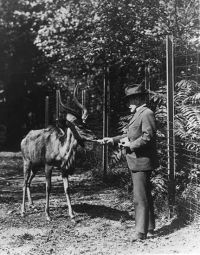
Despite humanity's efforts to partition the landscape, wild creatures consistently demonstrate the permeability of these boundaries. Animals often regard fences with suspicion, viewing them as potential traps that disrupt their natural movements [10]. Yet, they also prove remarkably adept at overcoming them. Coyotes, for instance, can readily find ways to crawl under or through wire fences, showing that such barriers are not impenetrable deterrents to either escape or predation [13]. Domesticated animals, when reverting to a wilder state, can treat fences as trivial obstacles, easily surmounted in their return to a more instinctual, panther-like existence beyond the confines of civilization [18]. The persistence of wildlife highlights the ultimate limitation of human attempts to enforce absolute separation.
Beyond the actions of animals, nature itself works to absorb and reclaim human constructions over time. As Nathaniel Hawthorne observed, a stone fence in England does not remain a sterile monument to human labor for long; moss, ivy, and flowers quickly colonize it, integrating the structure into the living landscape until it seems a part of nature itself [11]. In North America, the dilapidated worm fence, with its zigzagging form, becomes a sanctuary for biodiversity. As it decays, it offers a protected haven for vines, shrubs, and the many small creatures that thrive in its tangled embrace, transforming a line of division into a corridor of life [14, 15]. This process of reclamation suggests that human impositions are temporary, subject to nature's slow but relentless power of integration.
This physical reality is mirrored by a philosophical critique that views fences as a blight upon the landscape. To some observers, human 'improvements' serve only to deform nature, making it tame and diminished [12]. The very act of installing fences is seen as a petty expression of ownership that distracts from a deeper, more sublime connection with the environment, akin to searching for a post-hole in the middle of paradise . From this perspective, the ideal state is one where fences are removed and forests are left to stand, allowing for the restoration of a natural equilibrium [16]. The fence becomes a scar that nature will eventually heal, and its absence symbolizes a liberation from human constraints, opening the way to 'infinite wanderings' and a more holistic perception of the world [17].
The Broader Conflict Civilization Against Wilderness
The fence is a microcosm of a much larger, historical confrontation between human civilization and the wilderness. A pervasive narrative casts human expansion as a righteous and necessary endeavor, a battle to break the wilderness and impose a new order upon it [20, 22]. This process of 'taming' the land is frequently depicted as an unquestionable form of progress, ordained by a higher power or historical destiny, in which forests must fall to make way for 'habitations of ease and elegance' [21, 23]. In this worldview, wild territory is a raw resource awaiting transformation, and its subjugation is the very definition of civilization's advance .
This triumphant narrative of progress, however, stands in stark contrast to its ecological consequences. The relentless march of civilization is directly and calamitously linked to the destruction of natural habitats [24]. The clearing of forests, the draining of marshes, and the plowing of prairies for agriculture and development inevitably lead to the decline and extermination of the species that rely on those ecosystems [25]. As thinkers like William T. Hornaday noted early in the 20th century, wildlife is faced with a stark choice: either adapt to the radically new conditions imposed by humanity or perish . The expansion of human settlement is thus an existential threat to the non-human world, an inexorable force that sweeps away entire species in its path .
This dynamic creates a profound paradox within the human experience itself. Even as societies advance by subduing the wild, there remains a deep, instinctual longing for the very wilderness being destroyed . When human effort is relaxed, nature quickly begins to reclaim its territory, suggesting that civilization is a state of constant, laborious upkeep against a persistent natural wildness [19]. This ongoing struggle is often viewed with a sense of inevitability, a belief that the course of things requires the replacement of animal and vegetable being with 'restless, erring, suffering humanity' . The result is a civilization that simultaneously yearns for and systematically eliminates the wilderness from which it emerged.
Redefining the Fenceline Towards Conservation
As the consequences of unchecked expansion became undeniable, a significant shift in perspective began to emerge. The same advanced civilization that had once prioritized the destruction of the wild started to develop an appreciation for it, leading to the birth of the conservation movement [28]. This new outlook recognized that exploited wild life, much like over-farmed soil, would fail unless managed with foresight [27]. A key insight was that nature possesses a remarkable capacity for recovery if simply left to its own devices. Unlike intensive agriculture, which requires constant human input, conservation could often be achieved by strategically letting nature alone .
This evolving philosophy has redefined the purpose of enclosure itself. The concept of the sanctuary reimagines the fence not as a tool for human exploitation but as a boundary for nature's protection. Within a sanctuary, the conventional relationship is inverted: it is a place where 'man is passive and the rest of Nature active' . This approach gives rise to modern conservation tools, such as the establishment of game preserves, the enforcement of close seasons for hunting, and the targeted protection of vulnerable species . Here, the boundary serves to shield ecosystems from human pressure, allowing them to function and recover according to their own internal dynamics.
The contemporary relationship between humanity and nature, however, is more complex than a simple division between pristine sanctuaries and developed land. Human-altered landscapes are not always ecologically sterile; the creation of varied environments like fields, gardens, and fences can sometimes increase the diversity and abundance of smaller forms of wildlife by providing new types of food and shelter [26]. This complexity does not, however, diminish the ethical responsibility of stewardship. Conservationists argue forcefully that allowing a valuable wild fauna to be wasted is a crime against both present and future generations [29]. In this modern view, humanity acts as a trustee for a natural inheritance, and the fenceline becomes less a border of conflict and more a zone of conscious, responsible management.
The physical and conceptual fenceline has always reflected humanity's prevailing attitude toward the natural world. It originated as a straightforward tool of dominion, essential to the establishment of private property, agricultural order, and the conversion of common lands into private wealth . In the contested landscapes of expanding frontiers, it became a symbol of conflict, marking the violent clash between different modes of living and land use . As its ecological impact became clear, the ever-advancing fenceline of civilization came to represent the destructive pressure placed upon wilderness and its inhabitants . In its most recent incarnation, however, the fence has been repurposed as an instrument of preservation—a means to enclose nature not for exploitation, but for its own protection within sanctuaries .
Today, the challenge is no longer simply about drawing lines to separate the human from the wild, but about managing the profoundly interconnected and permeable boundaries between them. The simplistic binary of a civilized interior and a savage exterior has given way to a more nuanced understanding of ecological interdependence. The critical questions have shifted from whether to enclose to how and why we do so. The future of conservation depends on reimagining these fencelines not as hard divisions, but as interfaces for coexistence and stewardship. This requires acknowledging our role not as conquerors of a vanquished wilderness, but as trustees of a shared and finite planet, with a moral obligation to preserve its richness for the generations that will follow .