AI-generated from sources
The return of the crooked-back ox: Bison restoration as cultural sovereignty and atonement
In Brief
- The American bison was the keystone species for Plains Indigenous cultures, structuring their economy, material culture, society, and spirituality.
- The 19th-century slaughter was a deliberate strategy of conquest, aimed at severing Indigenous autonomy and forcing dependence through the destruction of their primary resource.
- Early conservation efforts saved the bison from total extinction, motivated by a moral imperative and 'sentimental reasons' for national atonement.
- Today, the restoration of bison to tribal lands is a core element of Indigenous sovereignty, linking ecological healing with cultural revitalization and the rebuilding of traditional food systems.
Main authors
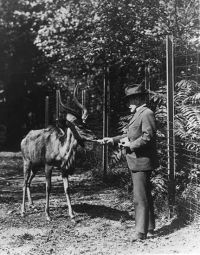

Before its near extermination, the American bison, once described as the “crooked-back ox,” roamed North America in numbers so vast they seemed inexhaustible [1]. This magnificent species was not merely a feature of the landscape but the central pillar of the plains ecosystem and the cultures that thrived within it [2, 3]. The precipitous decline of the bison from teeming millions to a few hundred individuals stands as a profound national disgrace, representing not just an ecological catastrophe but the deliberate dismantling of a way of life [4]. The story of the bison is therefore a dual narrative of immense loss and the possibility of atonement [5].
For the Indigenous peoples of the Great Plains, such as the Blackfeet and Crow nations, the bison was the ultimate source of life, structuring their economies, social norms, and spiritual beliefs [6]. Their nomadic existence was synchronized with the great herds' movements across the continent . Consequently, the systematic slaughter of the bison in the 19th century was not an unintended consequence of westward expansion but an effective strategy of subjugation. By destroying the animal, settlers and authorities severed the vital connection that sustained Indigenous autonomy and cultural identity, forcing a reliance on unfamiliar and often disdained government rations [7].
The subsequent effort to save the bison from complete annihilation, therefore, transcends a simple conservation victory [8, 9]. The managed return of bison to tribal lands today represents a critical step toward restoring what was lost. It is a movement aimed at cultural revitalization, the rebuilding of sustainable economies, and the healing of both communities and ecosystems. This process of ecological restoration is deeply intertwined with the assertion of Indigenous sovereignty, offering a path to reclaim a future where cultural heritage and economic self-determination are anchored by the return of this keystone species [10].
A Keystone Species for Culture and Economy
The bison's integration into the lives of Plains peoples was total. For nations like the Blackfeet, the animal was the primary raw material for nearly all aspects of material culture . Their buffalo-hide lodges and clothing were renowned for their quality and elegance, signifying a society that had perfected the use of its core resource . Beyond shelter and attire, the bison provided the components for critical tools and weapons. Highly valuable bows were crafted from bison bone, items of such worth that they could be traded for significant assets like ponies [11]. This economy was not one of simple subsistence but of sophisticated craftsmanship and wealth derived directly from the herd.
As a food source, the bison was unparalleled, forming the bedrock of diet and social customs [12, 13]. Accounts from early encounters describe elaborate meals composed entirely of bison parts, from the tongue to the hump, indicating a deep culinary knowledge . This reliance was governed by a principle of scrupulous economy, where every fragment of the animal was put to use, a philosophy of non-wastefulness that stood in stark contrast to the destructive practices that would follow [14]. The sharing of this food was also central to social cohesion and hospitality, with hosts invariably offering their guests the choicest portions first .
The significance of the bison extended deep into the spiritual realm. It was not viewed merely as a resource to be harvested but as a sacred relative and a central figure in creation stories and religious cosmology. For the Minnitarees, there was a belief in the animal's cyclical regeneration; the bones of slain bison were thought to rise again with renewed flesh, explaining their seemingly endless abundance [15]. This worldview posited a reciprocal relationship between humans and the bison, one sustained by respect and ritual rather than simple domination. The animal's existence was a divine provision, and its presence affirmed a cosmic order that sustained the people.
The Architecture of Extermination
The westward expansion of the United States introduced a worldview fundamentally at odds with the Plains cultures, leading to inevitable and violent conflict . For settlers, the vast, open plains supporting the bison were not a complete and functioning ecosystem but an empty space to be claimed and transformed. This clash over land and resources directly targeted Indigenous peoples like the Blackfeet, who were seen as impediments to progress and subjected to military and civil pressure [16]. The war against the people and the war against the bison became one and the same.
The near-total eradication of the bison herds was the direct result of this conflict, driven by a philosophy of unlimited exploitation [17, 18]. While the bison had long been the mainstay for Indigenous peoples and even early settlers, the scale and wastefulness of the 19th-century slaughter were unprecedented [19]. This destruction was facilitated by a mindset that viewed wildlife as property belonging to whoever could take it, with little to no recognition of the vested rights of others or the concept of shared stewardship . The result was an ecological and cultural unraveling that left a permanent scar on the continent .
The loss of the bison was more than a practical or economic disaster; it was the erasure of a landscape's soul. The sight of immense herds trailing across the plains, a vision that had defined the North American interior for millennia, vanished in a few short decades [20]. This act of extermination revealed modern civilization as a uniquely wasteful predatory force, capable of wiping out entire species through a combination of technological efficiency and a profound lack of foresight . The silence that fell over the plains was a testament to this destructive capacity.
Conservation and the Path to Restoration
Just as the bison reached the verge of complete disappearance, a nascent conservation movement began to take shape. The species was ultimately saved from total extinction not by a change of heart on the frontier, but by the survival of a few hundred individuals in remote areas like northern Athabasca and Yellowstone Park, supplemented by crucial captive breeding efforts . Unlike other species that vanished forever, the bison's ability to breed in captivity offered a lifeline, making its recovery a tangible, though monumental, task .
This task was undertaken by a coalition of government bodies, scientific societies, and concerned individuals . The United States and Canadian governments took decisive steps by establishing protected federal game preserves and national ranges, such as the Montana National Bison Range, specifically to nurture remnant herds [21, 22]. These sanctuaries provided the space and security necessary for bison populations to stabilize and begin the slow process of recovery. These actions were a conscious attempt to atone for decades of neglect and to preserve a living icon of the American West .
The success in saving the American bison was driven largely by what observers at the time called sentimental reasons—a recognition that the extermination of a species is a moral and aesthetic crime against the future [23]. This achievement provides a powerful model for other wildlife preservation efforts. It demonstrates that even when a species is pushed to the brink, concerted and dedicated action can reverse the tide. The bison's survival is a beacon of hope, proving that atonement for past destruction is possible and that ecological wounds, however deep, can begin to heal.
The journey of the American bison encapsulates a dramatic arc in North American history: from its role as the central life source for Indigenous nations to its near annihilation at the hands of an expansionist society, and finally to its celebrated recovery through deliberate conservation . This trajectory is not merely about an animal species; it mirrors a profound and ongoing shift in the continent's ecological and cultural consciousness. The bison's story forces a confrontation with the consequences of unchecked exploitation while simultaneously offering a powerful example of restorative justice .
Today, the return of bison to tribal lands is a forward-looking act that connects ecological health with cultural revitalization and economic sovereignty. For Indigenous communities, managing their own bison herds is a reclamation of heritage and a step toward self-determination, allowing them to rebuild food systems and local economies rooted in their own traditions . The future of the crooked-back ox is thus inextricably linked to the future of the peoples who co-evolved with it. Its restoration is more than a conservation success; it is a living symbol of resilience and the enduring power of a sacred relationship between a people and the land.