The law of conservation of energy states that energy within an isolated system stays constant, shifting between different forms without being created or destroyed. From ancient philosophical ideas to modern physics, this principle has influenced scientific thought, connecting mechanical motion to heat, mass to energy through E=mc², and forming the basis of thermodynamics.
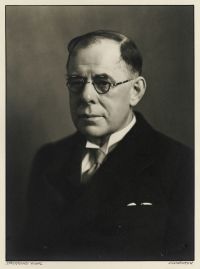
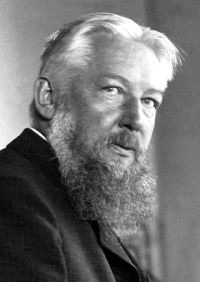
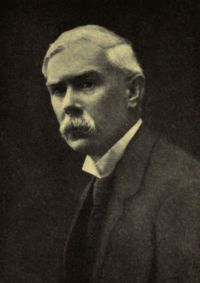
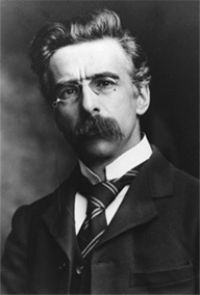
Writers such as William Hooper stressed energy’s indestructible character, while Lucien Poincaré celebrated it as a unifying foundation across various fields. Ernst Mach and George McCready Price underscored its significance for biology and cosmology, portraying it as a universal rule governing both physical and energetic processes. This principle, grounded in symmetry and empirical precision, continues to be essential in explaining natural phenomena and the dynamics of the universe.