Magnetism

Definition and stakes

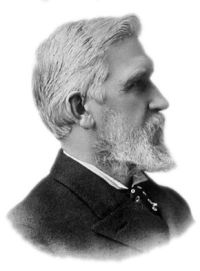
14th earl of James Sinclair Caithness,  Lectures on popular and scientific subjects

“ Magnetism.—Unlike electricity, which acts with a shock and then expires, magnetism is a constant quantity, and constant in its action; and it has this singular property, that it can impart itself as a permanent force to bodies previously without it. Thus, there being natural magnets and artificial, we can, by passing a piece of steel over a magnet, turn it into a strong magnet itself; although we can also, when it is in the form of a horse-shoe, by a half turn round and then rubbing it on the magnet, take away what it has acquired, and bring it back to its original state. ”
Source: Gutenberg

Portrait of James Clerk Maxwell James Clerk Maxwell,  On Faraday's Lines of Force (1855)

“ Whenever we deal with quantities relating to magnetism, we shall distinguish them by the suffix (1) . Thus are the components resolved in the directions of of the quantity of magnetic induction acting through a given point, and are the resolved intensities of magnetization at the same point, or, what is the same thing, the components of the force which would be exerted on a unit south pole of a magnet placed at that point without disturbing the distribution of magnetism. ”
Source: Wikisource

Portrait of Simon Newcomb Simon Newcomb,  Side-Lights on Astronomy and Kindred Fields of Popular Science

“ Its magnetism does not produce the slightest influence upon the human body. No one would know that it was magnetic until something containing iron was brought into its immediate neighborhood; then the attraction is set up. The most important principle of magnetic science is that there are two opposite kinds of magnetism, which are, in a certain sense, contrary in their manifestations. The difference is seen in the behavior of the magnet itself. ”
Source: Gutenberg

Get perspective with Kwize: daily news enlightened by great literature