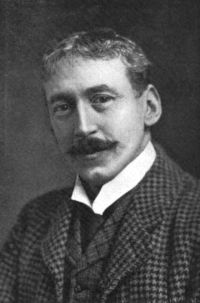
H. De Vere Stacpoole

H. De Vere Stacpoole

Summary

Portrait of H. De Vere Stacpoole H. De Vere Stacpoole Madness from the Sky (1927)

Just in that moment when the sun has all but freed himself from the horizon, the pampas, in weather like this, is a golden and a wonderful and a living thing; comfortable as the light of a fire, the light of the sun destroys desolation and the bleakness of distance and almost the sense of loneliness.
Luggard had a month before him, perhaps more, to be lived out in this place. Here on the pampas he had to face Nature and Time without a companion and without a roof to cover him, and—at first sight, without an occupation to engage his mind.
Source: Wikisource

Portrait of H. De Vere Stacpoole H. De Vere Stacpoole Madness from the Sky (1927)

The pampas lay under the light of the moon, still not a breath of wind or stir of bush, only the drumming of the rain which turned into a drumming of hoofs and—there they were, a herd of guanacos coming as if straight for the camp and as if driven by the fiend.
Fallon, awakened, now slipped out and they ran to quiet the horses neighing and backing from their tethers whilst the herd, fifty if one, passed as though following a ruled line and scarcely swerving from the presence of the humans.
Source: Wikisource

Portrait of H. De Vere Stacpoole H. De Vere Stacpoole Madness from the Sky (1927)

A mile from the fatal spot the worry had lifted; he was going somewhere, marching with the hundred million primitive men, his ancestors, who on their great migrations and hunts never worried about the shelter of a cave or a hut. And he could not turn back with all those tribes behind him, on either side and leading him.
That night he slept the sleep of the dead-tired beside a red-wood bush, not worrying about any shelter, and later, within a day's march of San Julian, bronzed, footsore, half starved, yet sane, he met Fallon and the waggon which Fallon had gone to fetch.
Source: Wikisource

Get perspective with Kwize: daily news enlightened by great literature