Placenta

Definition and stakes

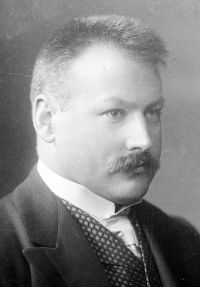
Portrait of Joel Shew Joel Shew,  Midwifery and the diseases of women (1852)

“ Now please remember that it is right that the placenta should grow fast to the womb; that is, to its inner surface. It is always grown fast, and should be; but it is possible for it to adhere more firmly in some cases than in others; and in some cases, too, the uterus seems to be so weak that it has not power sufficient to expel it.
In cases when the womb is very active after the birth of the child, the placenta may be expelled very quickly.
”
Source: Gutenberg

Amanda K. Beck,  A reference hand-book for nurses (1919)

“ The placenta thus has a two-fold function in acting both as an organ of circulation and of respiration. It is through the walls of the villi that this interchange of gases and fluids takes place; nourishment and oxygen passing through them to the fetus, and carbonic-acid gas and waste materials passing through them to the mother. There is no direct communication between the fetal and the maternal blood. The placenta, normally, is attached to the contractile part of the uterus, and on its separation the blood-vessels are closed by the contractions of the uterine wall. ”
Source: Gutenberg

George Morant,  Hints to Husbands: A Revelation of the Man-Midwife's Mysteries

“ Removal of the Placenta.—There is no part of natural labour which requires so much judgment as the conduct of the third stage; for the slightest mismanagement of the placenta may be productive of most serious mischief, by converting [Pg 39] a perfectly natural into a most dangerous and complicated case. As long, then, as the placenta remains in utero, so long we must wait, within a certain limit—provided there be no flooding—for those contractions which are to expel it from the uterus into the vaginal cavity, &c. ”
Source: Gutenberg

Get perspective with Kwize: daily news enlightened by great literature