Ovulation

Definition and stakes

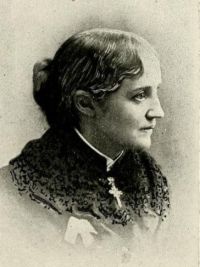
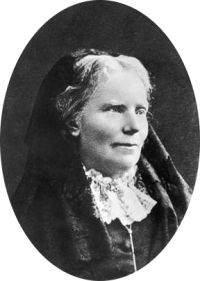
Portrait of Elizabeth Blackwell Elizabeth Blackwell,  Essays in medical sociology, Volume 1… (1902)

“ A greater amount of varied action in the complicated organs is necessitated in order to maintain their adult aptitude. The function of ovulation (formation of ova) is not increased or diminished by the will, or by the dwelling of the mind upon sexual objects, at all to the same extent that spermation (formation of sperm) may be affected by the same mental action. Ovulation, and its natural accompaniment, menstruation, is much more of a necessary fixed quantity than spermation and its natural accompaniment, sperm-emission. ”
Source: Gutenberg

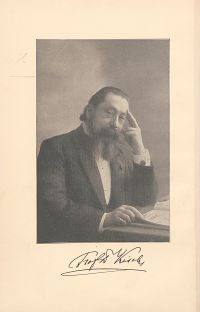
Portrait of E. Heinrich Kisch E. Heinrich Kisch,  The sexual life of woman in its physiological…

“ The undulatory movement of the vital processes in woman is apparently in some way dependent on ovulation, though the nature of the connection has not hitherto been fully elucidated. This view is confirmed by the fact that no such rhythmic variation in the bodily functions can be detected either in girls under thirteen years of age, or in women from fifty-eight to eighty years of age in whom menstrual activity has entirely disappeared. The menstrual rhythm begins at puberty and ends when ovulation ceases. ”
Source: Gutenberg

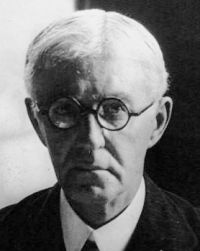
Portrait of Havelock Ellis Havelock Ellis,  Studies in the Psychology of Sex…

“ On the other hand, a rudimentary state of the uterus, and a complete absence of menstruation, may exist with well-developed ovaries and normal ovulation. [99] We must regard the uterus as to some extent an independent organ, and menstruation as a process which arose, no doubt, with the object, teleologically speaking, of cooperating more effectively with ovulation, but has become largely independent. [100]
It is sometimes stated that menstruation may be entirely absent in perfect health.
”
Source: Gutenberg

Get perspective with Kwize: daily news enlightened by great literature